Showing posts with label Christendom. Show all posts

Sunday, June 2, 2024

The Pure, Simple Faith #Jesus Taught! #JesusFollowers


To promote real morality and true piety, we can conceive nothing so well fitted as the simplicity of Jesus - the plain, unequivocal, uninvolved requirement of love to God, tested by love to others and active usefulness in life. 

How utterly simple and plain, how free from all subtlety and dogmatic obscurity, is the teaching of Jesus.

His Sermon on the Mount is indisputable, practical, simple, having no abstruse, remote, or novel concepts. It proclaims no ideas that amaze or confuse, nor does it call for careful consideration on account of its novelty. It is a solemn, searching declaration of the universal religion of humanity. 

In it, he proclaims that God is holy, wise, good; blessed are you if you are pure, meek, hungering for righteousness, and living from the heart pure, useful, holy lives. This is all the doctrine there is in it ; not a word about the nature of the Godhead, the fall of man, the need of the atonement, the deity of Christ, the necessity of baptism and the saving sacrament of the  communion.  

Jesus was no scholar. He spoke the language and the truth and the religion of a simple, deep-thinking representative of universal humanity - true always, everywhere, and for all. There is nothing to add, nothing to take away, nothing to excuse or to explain away in his clear teachings. 

His teachings do not need any changes for the times, or the nation, or the circumstances, to account for them. It is because they give voice to what humanity knows and feels to be deepest and holiest, that they hold the allegiance of the Twenty-first, just as they will for those living of the Thirty-first Century. 

We cannot conceive of anything pertaining to our religious wants or our religious faith that do not already exist in the precepts, spirit, and example of Jesus.

We can very easily make the clear, simple, moral fact precisely what we choose to have it by enough twisted reasoning. And as we consider our consciences, so we are apt to consider our religion. God has pronounced it simple, plain, unmistakable. Jesus has taught and illustrated it in ways a child can understand. But it is so plain that it becomes severe; so simple that it looks cold and hard, like a marble statue.

We often hear the simplicity of Jesus as it reveals itself in the Sermon on the Mount compared disparagingly with the complicated faith of the Nicene Creed. But what can we call “the Christian religion” except that which really adds nothing to the old Jewish and the older natural religion of love to God and love to man, except the example and spirit of Jesus! 

What becomes of the Fall, and the Curse, and the Atonement, and the Sacraments, and the Trinity, and the Deity of Christ, and all the rest of the dogmatic paraphernalia of religion? They become invisible, like candles in the presence of the sun. 

It is the keeping of these great commandments that discloses their richness and fullness. They are simple, few, and concise. But live by them, and you will find that all the bodies of divinity in the world could not contain their lessons, or describe the glorious richness of their contents.

Do not allow yourselves to fall under the dominion of these high-sounding subtleties, these dark dogmas, these involved metaphysical puzzles, which pass for religion and Christianity. They will unsettle your common sense, and fog up your conscience, and finally make you think religion is not the plainest thing in the world - a highway, in which the wayfaring human, though a fool, need not err, — but an enigma and a riddle, a sphinx which you must helplessly bow before and adore, though it will answer no question you put to it.

It is not the unknown we can profit by, but the known. It is not the obscure, but the plain, that should have our attention. It takes no learning, no scholarship, no formal logic, no fine-spun reasoning, to know God so far as we need to know Him, as a moral governor and Father of our spirits; to know Jesus as a holy, gentle, and wise master and guide of character; to know our duty well enough to live chastely, truthfully, honestly, with mercy and sympathy.

(Adapted from a sermon by Dr. Henry W. Bellows)

Sunday, May 5, 2024

Some False Doctrines Churches Teach [#JesusFollowers]


If you hear sermons from the pulpits of Western Christian "Churches," or if you've ever picked up a "fundamentalist tract" on the ground or in a public bathroom, you may be hearing many falsehoods that Jesus never preached as part of his Gospel. Here are a few of them, and wh you ought to reconsider basing your faith on them. (Or on anything other than the words of Jesus.)

1. "Jesus teachings are 'for the Jews' but not for us, Today." 

This was debunked by Jesus, himself, who said his words would never pass away, and sent the Jerusalem Apostles out into the world in his Great Commission to tell people to obey his teachings. That's Not "just for the Jews." He did say for the Apostles to go to the Jews FIRST, which they did. 

2. The late theologian John D. MacArthur infamously said, "Christianity has nothing at all  to do with the teachings of Jesus."

What he meant as a statement of theology is actually true of modern Christianity, but that's a fact we should mourn, not celebrate. Denying Jesus or putting his life story first, which MacArthur taught, and most Christians believe, is false.

3. "We Inherit Adam and Eve's "Original Sin" at Birth and it means we are Cursed, Cannot Obey God, and Are Totally Depraved, unable to do any good."

Variations of this is taught in churches, but not often said out loud or in these words. None of this is consistent with Bible teaching. God told Adam's own son that he would be rewarded if he did what was right, but he would be punished if he did what was wrong. Catholic "Church Father" Augustine of Hippo wrote of Cain, and us, saying it is, "non posse non piccare" (not possible (for us) to not sin." And this became Catholic Doctrine in the early Fifth Century, despite contradicting God's  very words in Genesis. Who will You believe? 

4. "The Bible's High standards of morality, especially in Jesus's teachings, were simply meant to "convict" humans and aren't meant for us to obey, because we are morally unable." 

This man-made nonsense turns the entire Bible on its head and makes Jesus and the Prophets into liars. If we are unable to do these things, calling on us to do them is sadistic of God, His rules would be pointless, and his punishments for failing would be unjust, if his words were impossible to obey. Of course, this isn't the case.  

5. "Jesus Forgot To Teach That He Was Part of a Godhead or that he was a Person in it, Equal to God.

 Jesus told the Apostles that everything he heard from God, his Father, he told to them. He didn't forget to mention these things about a Godhead, or that he had actually created the world. Why wouldn't he tell them outright that he had created the world? Clever men today may twist his words, just as the religious teachers of God's day tried to do,  or use other men's words to imply otherwise, but we follow Jesus, who said he had a God, and prayed to God, Whom is his God? Our Father. And his.

EVERYTHING.

Yet, Jesus said not one word of being part of a Godhead in which he shared the "substance of the Father " and a "person" called the Holy Spirit nor was this written by the Gospel book writers, because this definition of a Godhead wasn't invented until the 4th and 5th centuries by clever philosophers, turning spiritual and theological phrases into literal ones. Jesus said he was one with the Father, but also that he wanted his disciples to be one with him,  just as he was one with the Father. 

6. "Make war With Your Prayers. Be "Prayer Warriors " for Christ."

That phrase never occurs in the Bible, nor is it a strategy suggested by Jesus. But many "Prayer Warriors" today use prayer as a weapon.  Jesus calls us to pray FOR our enemies, and bless those who curse us, not use prayer against them. Adversaries of Good are defeated by our Good deeds in the world, not hateful vibes sent out to God, directing Him to do our bidding.

7. "Jesus Was Born Of A Virgin on December 25th as a star moved over his stable and God Was His Father, Not Joseph. Jesus Was the Legitimate King Of The Jews. God Impregnated Mary, A Virgin, Became A Man  Jesus Was The God-Man: Both Man And God."

Sorry to ruin Christmas, but... Propagated by Catholic Second Century Christians, this collection of pagan stories are recited every Christmas as if they are Historically accurate. But it's all based on a false translation of a line in the Old Testament (Isaiah 7:14) that didn't apply to a future Messiah figure, it certainly did not apply to Jesus, the Hebrew word, "Almah" used by Isaiah simply means "young woman," but was mistranslated in the Greek Septuigaint version as "virgin" and subsequently "Matthew" and Luke spun the yarn of a virgin conception and birth.

8. "Jesus' Death Gave God Permission To Forgive Human Beings." 

This silly and blasphemous statement is made by Televangelists of our own age, but not by Jesus, our only teacher, who said we must forgive 70x7 times. 

These same men teach, "Only God Can Forgive Sins, " just as the Jewish opponents of Jesus also said about him.  While it's true that we can't forgive sins others commit against God, Jesus says we must forgive others IF we wish God to forgive us. 

9. "The Devil Is the Ruler Of The Earth."

 A false and foolish saying, refuted by Psalm 24: The earth is Yahweh's and all that is in it, the world, and those who live in it." False teachers of darkness preach this today as a way to put Jesus higher above humans, and make God seem more aloof. They don't need the help and God is spiritually alive in us, here on the dirty, filthy old earth of His.

10. "The Bible has been Preserved by God Just As It Was In Jesus' Time." 

The Bible in Jesus's time was just the Hebrew Scriptures, and even that collection of books wasn't canonized (collected and approved by a council of Rabbis) until the Second Century, AD. And think about this: no one carried around printed Bibles until modern times. The New Testament contents weren't finalized until AD 367 by a Catholic Council. The Eastern Orthodox Church, to this day,  uses a Bible with several books that were never in the Catholic Canon.

And several books used by all churches today (including Jude and Hebrews) were almost left out of the Canon, while others (like 1 Clement and Shepherd of Hermas) were widely used by many churches in the first century, but were eventually dropped. During the Reformation, Martin Luther wanted to leave the Revelation of John and the Letter of James out of his German translation, but was convinced to leave them both in. 

In England, the books of the Apocrypha were quietly dropped from the King James Bible in its 1750s revision. Why didn't God keep all these books in? This doctrine is clearly false.

Sunday, March 17, 2024

Why Most Preachers Are Mediocre [JesusFollowers]


The history of the world is full of testimony to prove how much depends upon pastors being industrious; not an eminent orator has lived that isn’t an example of it. Yet, in contradiction to this, the almost universal feeling appears to be that industry can affect nothing, that eminence is the result of accident, and that everyone must be content to remain just what he may happen to be. That's wrong.

Thus multitudes who come forward as teachers and guides, allow themselves to be satisfied with the most indifferent attainments and a miserable mediocrity, without so much as inquiring how they might rise higher, much less making any attempt to rise. For any other art they would have served an apprenticeship, and would be ashamed to practice it in public before they had learned it. If anyone would sing, he attends a master, and is drilled in the very elementary principles, and only after the most laborious process dares to exercise his voice in public. 

This he does, though he has scarcely anything to learn but the mechanical execution of what lies in sensible forms before his eyes. But the extemporaneous speaker, who is to invent as well as to speak, to carry on an operation of the mind as well as to produce sound, enters upon the work without preparatory discipline, and then wonders why he fails! If he were learning to play on the flute for public exhibition, what hours and days would he spend in giving practice to his fingers, and attaining the power of the sweetest and most impressive execution! 

If he were devoting himself to the church organ, what months and years would he labor, so he might  be master of its keys, and be able to draw out, at will, all its various combinations of harmonious sound, and its full richness and delicacy of expression! And yet he will believe that the grandest, the most various, the most expressive of all instruments, which the infinite Creator has fashioned by the union of an intellectual soul with the powers of speech, may be played upon without study or practice; he comes to it a mere uninstructed tyro, and thinks to manage all its stops, and command the whole compass of its varied and comprehensive power. He finds himself a bungler in the attempt, is mortified at his failure, and settles it in his mind forever that the attempt is vain.

Success in every art, whatever may be the natural talent, is always the reward of work and pain. But the instances are many, of men of the finest natural genius, whose beginning has promised much, but who have degenerated wretchedly as time advanced, because, like some who received talents from the King and did nothing with them but bury them, they received their gift of voice, and made no effort to improve them.

That there have never been other men of equal endowments with Demosthenes and Cicero, none would venture to suppose; but who have so devoted themselves to their art, or become equal in excellence? If those great men had been content, like others, to continue as they began, and had never made their persevering efforts for improvement, what would their countries have benefited from their genius, or the world have known of their fame? They would have been lost in the undistinguished crowd that sunk to oblivion around them. Of how many more will the same remark prove true! What encouragement is thus given to the industrious! With such encouragement, how inexcusable is the negligence which suffers the most interesting and important truths to seem heavy and dull, and fall ineffectual to the ground, through mere sluggishness in their delivery! 

How unworthy of one who performs the high function of a religious instructor upon whom depend, in a great measure, the religious knowledge, and devotional sentiment, and final character, of many fellow-beings to imagine that he can worthily discharge this great concern by occasionally talking for an hour, he knows not how, and in a manner which he has taken no pains to render correct, impressive, or attractive, and which, simply through the  lack of that command over himself which study would give, is immediate , methodical, verbose, inaccurate, feeble,  and trifling! 

It has been said of the good preacher that "truths divine come from his tongue." Unfortunately, they come forth ruined and worthless from such a man as this. They lose that holy energy by which they are to convert the soul and purify man for heaven, and sink, in interest and efficacy, below the level of those principles which govern the ordinary affairs of this lower world.

It is a great fault with intellectuals, that they do not make sufficient allowance for the different modes of education and habits of mind in people of other pursuits. It is one of the deficiencies of a university education, that a person is there trained in a fictitious scene, where there are interests, associations, feelings, exceedingly diverse from what prevail in the society of the world; and where he becomes so far separated from the habits and sympathies of other men, as to need to acquire a new knowledge of them, before he knows how to address them. 

When a young person leaves the seclusion of a student’s life to preach to his fellow human beings, they are likely to speak to them as if they were scholars. The former student imagines them to be capable of appreciating the niceties of method and style, and of being affected by the same sort of sentiment, illustration, and clever remark, which affects those who have been accustomed to be moved and guided by the lifeless pages of a book. He  therefore talks to them calmly, is more anxious for correctness than impression, fears to make more noise or to have more motion than the very letters on his manuscript; addressing himself, as he thinks, to the intellectual part of the person; forgetting that the intellectual mind is not very easy of access, that it is barred up, and must be approached through the senses and affections and imagination.

(adapted from an 1824 sermon "Hints On Extemporaneous Preaching," by Rev. Henry Ware, Jr. 1794-1831))

Sunday, January 7, 2024

A Faith That Works #JesusFollowers


Without action, nothing is achieved. Jesus told a parable in which a king left a group of servants in charge of some money. The ones who invested and used it were praised upon his return. Those who did nothing and hid the money were scolded.

The same is true with our Faith in God, Whom Jesus reveals to us through his teachings, life and death. We are saved from sin in this life, and eternally, only by the teachings and example of Jesus.

A Faith that rests in smug complacency and pride fails. A Faith that puts our talents to work and tests us makes us spiritually stronger.

Jesus calls us to run, to achieve, to do, to act, to work, to become better, to seek out truth, to be righteous, to be humble, to worship and praise our God, and to love others.

And our works have eternal consequences, as well as being of great benefit to others around us right now.

This is a world desperately in need of a deep, loving faith that can work righteousness in the heart as well as in the mind. It needs a Kingdom of Godly men and women who actively feed the hungry, clothe the naked, house the homeless, bind up the broken-hearted and tend to the ill. This is the very mission Jesus tells us he was sent to proclaim by his, and our, Creator.

Mere platitudes and a religion based upon “instant salvation,” which leaves our neighbors unloved, unserved, and falsely assured of eternity, cheats both them and us out of experiencing the Kingdom that Jesus announced as his mission.

Jesus taught clearly that we are saved eternally by God according to our works (though not by others' opinions of our works, nor by our high opinion of our own works, nor by how loudly we perform our works.)

God alone judges our Works, but it's clear from Jesus' teachings that mere good intentions alone do not save us, nor do they bring about God's Kingdom on earth.

There is no other teaching claiming the name ‘Christianity” that leads to salvation other than the words of Jesus, our Master. All we need to know about God’s Will for us was revealed in the words and example of Jesus, the one God adopted, chose and commissioned to preach to us.

So, when we encounter what is claimed to be the Gospel, if it fails to challenge us to pursue Good Works, we know that it's a false and easy Faith we've encountered – a wide and false gate, rather than the Gospel preached from the very mouth of Jesus.

That's because Jesus clearly calls us to an active Faith - a Faith that Works. It's a challenge worth accepting and worth LIVING. It leads to a spiritually complete life and to eternal life.

Jesus is a teacher who challenges us, his students, to become spiritually complete by actively seeking and doing Righteousness.

“For I have given you an example,” says our Master, “that you also should do just as I have done to you.”  (John 13:15)

Jesus preached in order to challenge us to seek spiritual completeness, and calls us today to be examples in his name. And he, as a human being, demonstrated that we can follow him in all things.

To imagine Jesus teaches anything less is to make him and his teachings into something small, and his Faith into something light, unimportant, and easy to obtain.

We must not degrade Jesus' teachings and the Faith that he proclaimed to the world in this way. And we should not settle for a Faith that doesn't Work Righteousness in this world, which desperately needs it.

Sunday, December 24, 2023

Let Us "Welcome" The Adult #Jesus Too! #JesusFollowers


Tomorrow, on Christmas Day, we "welcome" Jesus into the world along with Christendom. This is a Jesus we already know, a man fully grown and with whom we are more than acquainted.

This isn't a baby we must perpetually welcome into our homes. In the rest of the Gospels, we are confronted instead with the adult Jesus.

Meeting this adult Jesus is difficult for many, and even frightens them to meet him as an adult and not a helpless, unassuming child, a God-man who need only be worshiped, not a master we are compelled to obey.

The adult Jesus scared the religious elites of his day because of what he asked, just as he scares the religious elites of today.

Jesus is an adult whom we must each decide whether to ignore, or to serve as our Master and exemplar, as God intended us to do.

If we claim his name, and wish to be identified with it, we must not assume that admiring a baby in a manger is what God wishes. 

We must not delude ourselves that admiration - or even worship - is alone sufficient. We cannot ignore the adult Jesus, or prefer the baby instead of the adult.

The adult Jesus is hidden away by the religious elites. He scares them, as he did 2,000 years ago.

A fully human Jesus, fully grown, with a clearly understood, fully formed mission and a challenging religion of Good Works, scares them EVEN MORE! But that is exactly what he taught.

So this adult Jesus isn't celebrated at Christmas. At all. And he rarely, if ever, makes an appearance the rest of the year, either.

So, just who is this Jesus?

Jesus, the adult, was of course born a baby, but he was born fully a human, of human parents, just as we were born. (He was recognized as such in the Gospels by his neighbors, by the Disciples, and by his parents.)

He grew in the knowledge of God and gained wisdom; he pleased God in all he did. When he became an adult, he was chosen at his baptism and anointed by God to be our Master, our Teacher, our Template and the Example of how a human being should live for the glory of God and most beneficially for our fellow human beings.

This Jesus is not the one created for us by Priests whom we must simply admire and worship from afar; unable to obey, unable to follow because he is so different, so distant, so alien.

We may instead celebrate this Jesus - a man called and chosen by God - whom we can fully love as our elder brother, and the one whom we can actively follow as our example in all things. We may become more like God because one of us has done it already, setting the example towards which we may strive.

Let us remember the birth, but also the adult life, of THIS Jesus, a Jesus worth celebrating on  Christmas Day, and every day.

Sunday, November 19, 2023

The Glory of Jesus [Jesus Followers]

Christ Jesus’s mission was to save sinners, by engaging them to turn from the evil of their ways, and to subject their characters and actions to the law of love so, from hence, it will follow, that the only way in which he is, or can be glorified- by us, as our Savior, is, to let his Gospel have its due effect, and the purposes of his ministry be answered upon us and then we shall be the glory of Jesus. 

It is not the giving our assent to collection of speculative propositions nor strong confidence that Jesus will save us, nor the being united to a society called by his name (Christian) nor the constant attendance upon a set of ceremonial observances; nor the being noisy and troublesome for him, thereby disturbing the peace and quiet of the neighborhood in which we live, nor the drinking toasts to the Church's prosperity.

Though by the way,the term, Church, in modern language, generally signifies the Clergy, the authority and rights of the Church being no other than the authority and rights of the Clergy nor the afflicting and grieving our fellow-creatures, upon Jesus's account, either because they are not Christians at all, or because they do not come up to our standard of Christianity.

It is not these, nor the zeal and resentment that frequently spring from them, which Jesus is glorified by.  Some of these ministers are a shame and reproach to the Christian name, but: none of them minister to his praise.

Some of them reflect back great dishonor upon God and Jesus, with regard to their moral character, none of them add to their praise, byshowing them to be either wise or good. 

The true way to glorify Jesus is to reflect seriously upon those important truths, which he hhas proclaimed to the world, and to let those truths have their proper influence upon our minds and lives; by changing us from disagreeable and hurtful, to agreeable and useful members of society, and then we shall add much glory to Jesus, our Master. 

For as he undertook to save sinners in this way .so when his end is thus answered, then it is, that Jesus is glorified by us, 

Would we, then, answer the character of true Christians, and would we bring much glory to Jesus, our Master and Savior to let us reform our tempers and actions. Let us correct every disorderly, selfish, brutal, and inhuman appetite and passion and bring every thought into captivity to Christ's law of love. 

Let us put on such temper and behavior, as will render us a blessing to all around us by removing every uneasiness and every impediment to their happiness, and by contributing all we can to their comfort and felicity.

In a word, Let Jesus's Gospel have its due effect upon us, by making us good men, and then he will receive much glory from us we shall be The glory of Jesus, reflected upon the world.

Thus,. having gone through the several points which naturally offered themselves to be considered, from the words of the text; shall only make some short remarks from the whole, and so conclude. 

First, observe that though salvation is clearly described and evidently set forth by Jesus himself in his Gospel, yet nothing has been more generally mistaken. Christians have chosen any, yes, every other easy way to salvation, than the way which Jesus has shown and recommended to them. 

They would rather that Christ Jesus would save them, by acting mystically in them, or by doing good for them, or in any other way, than by his putting it upon themselves, to work out their own salvation. 

But, alas, none of those easy ways can possibly do it. For as their sin and folly, which is the ground of divine displeasure, is the product of their own will and agency, so nothing but repentance and reformation, which is the product of their own will and agency, also, can be the ground and reason of God's mercy; and lovingkindness to them.

Adapted from a tract, "The Glory of Christ," by Thomas Chubb, 1754.

Sunday, October 29, 2023

The Scary, un-Reformed “Reformation” Sunday

Want to know what's REALLY scary this Halloween? This Sunday is also celebrated as Reformation Day in so-called "Reformed" Churches across the world.

Why scary? Why "so-called?" Because the Reformation of the 16th Century failed to go far enough to pull Christianity out of Ancient and Dark Age pagan thinking about God, and millions still believe in SCARY-wrong doctrines. And these doctrines negatively affect how hundreds of millions respond to the Gospel – amd fail to hear the real Gospel as Jesus preached it, because of the failure of these “reformers.”

Sadly, almost 100% of Christians are unaware they are even infected with these theological diseases.

Like the scary belief by "Reformer" Martin Luther that one can "sin boldly!" because we can be secure in a one-time-only salvation event without the requirement of obedience to secure that Salvation  - a scary-unbiblical lesson, one that modern evangelicals learned so well, they think Jesus taught it. Close, but they're only 1550 years off, and the author is Luther, not Jesus!

The Reformers also failed to go back far enough and cure "Saint" Augustine's SCARY-wicked, and horrifyingly false belief that God's commands can only be obeyed IF He gives us the ability to do so in advance ("Give [me] what you command, then [you can] command whatever you want.") Scary-unbiblical, that is, because if we have a duty to obey, and will be judged according to our ACTS, we must be free to act by a just God, Whom otherwise would be at fault for us NOT obeying.

And, good news! The Scriptures say that human beings are FREE and morally able to obey God, which contradicts another of Augustine’s Vampire-like doctrines (which cannot be killed, and was later re-VAMPED and given new strength by the demon-like, murdering Theocrat John Calvin) in which he states that man CANNOT do any Good, because flesh is evil, while spirit is always good. Leaving aside the fact that flesh can be used for good OR evil, and that we can have very damaged spirits - the Augustine-created Original Sin doctrine pretends we are Zombies (from birth!) who are unable to do good, and ALWAYS are compelled to do evil, despite our Master Jesus’ commands and clear trust in us that we CAN to do good - and should do so, continually.

We can't really blame Augustine, since he was carrying over his beliefs from Manichaeism, his former religion, which taught that there were two Gods, one good and one evil, and flesh (and sex) was totally evil. Then again, maybe that’s actually CAUSE to blame him, and mightily, for bringing paganism into Christianity.

And millions of “Protestants” today, thanks to the so-called Reformer Calvin, now believe in SCARY Calvinist doctrines like the theories that God has damned some souls to a scary eternal hell - BEFORE THEY WERE EVEN BORN, and that they cannot do anything to prevent such a fate, which is pre-determined, unattached to their actions! This makes a mockery of Jesus' call for ALL to Repent, Believe and obey his words and serve God with Works of Righteousness. (Dare I mention the other scary belief by ANOTHER person who often contradicted the Savior, by claiming such Good Works are "filthy rags" in the eyes of God, misusing King David’s beautiful poetry of the Psalms? No, not now, but that Antichrist's misperception needs urgent Reformation, one day, too.)

And we shall leave for another time the numerous other doctrines, created by wicked and misled men, such as the abomination of Tri-Theism of the Catholic Trinity the “Reformers” refused to dump, the human sacrifice and commercial transaction atonement of Jesus on the Cross, the “instant salvation demand” of Easy-Believism, and the horribly scary, Anti-Christ of the Prosperity Gospel.

So let us hope those who attend Reformation Sunday services this weekend in their not-yet-dePaganized “churches” do so knowing that their Reformation is incomplete. To say the least, Christendom needs to repent quickly of these spooky, innovative, man-made doctrines.

The clear message of Jesus, warped and de-formed by a millennium and a half by outrageous man-made Councils and Papal misrule, was left grossly un-reformed and even more deformed by these horribly flawed “Reformers,” who ought not to be celebrated.

So, let the Reformation begin anew and finally be completed, back to the PURE, clear and plain teachings of Christ Jesus, the man whom God anointed as His spokesman and prophet: That we must repent of our sinful shortcomings, turn back to God, serving God and our fellow human beings fully and completely, seeking God’s help to live as Jesus lived, yearning to achieve the goals he set for us, that we might live fully and act righteously in this life, building up God’s Kingdom on this earth and building up treasure in Heaven so we might reside with God there forever. Amen.


Scripture and other Citations:
“Be a sinner, and let your sins be strong (sin boldly), but let your trust in Christ be stronger, and rejoice in Christ who is the victor over sin, death, and the world. We will commit sins while we are here, for this life is not a place where justice resides. We, however, says Peter (2. Peter 3:13) are looking forward to a new heaven and a new earth where justice will reign. It suffices that through God's glory we have recognized the Lamb who takes away the sin of the world. No sin can separate us from Him, even if we were to kill or commit adultery thousands of times each day. Do you think such an exalted Lamb paid merely a small price with a meager sacrifice for our sins?  Pray hard for you are quite a sinner.” (Letter 99, Paragraph 13, from Martin Luther's Saemmtliche Schriften) http://www.iclnet.org/pub/resources/text/wittenberg/luther/letsinsbe.txt

"For this commandment that I command you today is not too hard for you, neither is it far off. It is not in heaven, that you should say, 'Who will ascend to heaven for us and bring it to us, that we may hear it and do it?' Neither is it beyond the sea, that you should say, 'Who will go over the sea for us and bring it to us, that we may hear it and do it?' But the word is very near you. It is in your mouth and in your heart, SO THAT YOU CAN DO IT.” Deut. 30:11-14 (my emphasis)

“I call heaven and earth to record this day against you, that I have set before you life and death, blessing and cursing: therefore choose life, that both thou and thy seed may live.” Deut. 30:19

“And if it seem evil unto you to serve GOD, choose you this day whom ye will serve; whether the gods which your fathers served that were on the other side of the flood, or the gods of the Amorites, in whose land ye dwell: but as for me and my house, we will serve GOD.” Joshua 24:15

“GOD said to Cain, ‘Why are you angry, and why has your face fallen? If you do well, will you not be accepted? And if you do not do well, sin is crouching at the door. Its desire is for you, but you must rule over it.’” Gen. 4:6-7

“And ye shall observe to do all the statutes and judgments which I set before you this day.” Deut. 11:32

“My son, if sinners entice you, do not consent.” Prov. 1:10

“Do not envy a man of violence and do not choose any of his ways” Prov. 3:31

“No one is established by wickedness, but the root of the righteous will never be moved.” Prov. 12:3+

“God in the beginning created human beings and made them subject to their own free choice. If you choose, you can keep the commandments; and to act faithfully is a matter of your own choice. Set before you are fire and water; to whatever you choose, stretch out your hand. Before everyone are life and death, whichever they choose will be given them.” Sirach 15:15-17 (also in the 1611 KJV. Luther dropped this book from the Bible, for obvious reasons.)

“But those who do what is true come to the light in order that the light may show that what they did was in obedience to God.” John 3:21

“Whoever believes in the Son has eternal life; whoever does not obey the Son shall not see life, but the wrath of God remains on him.” John 3:36

“If you love me, you will keep my commandments.” John 14:15

“Whoever does not love me does not keep my words. And the word that you hear is not mine but the Father’s who sent me.” John 14:24

“Who is wise and understanding among you? By his good conduct let him show his works in the meekness of wisdom.” James 3:13 (Luther sought to drop this book from the NT, for obvious reasons, but was stopped by others from doing so.)

“By this we know that we love the children of God, when we love God and obey his commandments. For this is the love of God, that we keep his commandments. And his commandments are not burdensome.” 1 John 5:2-3

Sunday, August 6, 2023

The Real Message of the Thief On the Cross #JesusFollowers

Two men, identified in the Book of Luke as criminals, were put to death by crucifixion on either side of Jesus on Golgotha, the place of the Skull.

In Luke 23:39-43, the story is told that, "One of the criminals who were hanged railed at him, saying, “Are you not the Christ? Save yourself and us!” But the other rebuked him, saying, “Do you not fear God, since you are under the same sentence of condemnation? And we indeed justly, for we are receiving the due reward of our deeds; but this man has done nothing wrong.” And he said, “Jesus, remember me when you come into your kingdom.” And he said to him, “Truly, I say to you, today you will be with me in paradise.”

This thief's experience has long been repeated by ministers and Christian apologists as "proof" that salvation can come instantly to us, effortlessly, just for the asking, and requires no knowledge or action on our part. But a closer look at this story reveals a deeper message, more consistent with the teachings of Jesus, who should be our final authority.

The teaching of many modern preachers is that the thief received "instant salvation" because of his utterance to Jesus that he believed him to be the messiah.  But they neglect one important fact: the thief clearly knew Jesus, or at least knew about him and his ministry of the Kingdom.

This is evidenced by his statements that he knew that Jesus had "done nothing wrong," that he taught about a "kingdom" and that even his colleague had called him "the Christ," or "One who is Anointed (by God)." In this case, the Messiah, or savior.

His affirmation that Jesus was innocent and that he had been anointed by God to preach about a Kingdom, showed more than a passing knowledge of Jesus and his ministry. 

Therefore, his statements showed a knowledge of Jesus and his teaching, and that teaching had been that all will be rewarded according to their deeds. His utterance, therefore, was evidence of a previous faith in Jesus, even if it had been a recent one.

And we are called to, "Let your light shine before others, so that they may see your good works and give glory to your Father who is in heaven." (Matt. 5:16)

Showing mercy to the thief was clearly in line with Jesus' teaching that "blessed are the merciful, for they shall obtain mercy." The thief's comments to Jesus and his rebuke of his fellow thief were clearly acts of mercy and kindness towards Jesus, who had just forgiven those who were putting him to death, saying "Forgive them, for they know not what they do" (23:34) even as the Roman soldiers and others taunted him.

That the thief would "surely" be with Jesus "today" in paradise (a theological hornets nest, since Jesus was said in the Fourth Gospel to have ascended to Heaven two days later, on Sunday) doesn't mean the thief was "granted" eternal life with God in Heaven, based merely on his utterance on the cross. That would be assuming a fact not stated here. At most, it means he was to stand before God, and be with Jesus, in the afterlife. It certainly showed Jesus' approval, and appreciation, for the thief's comments.

Now, all this is not to say that the thief's late recognition of Jesus wasn't rewarded by God. After all, God isn't bound by our utterances, nor by our sense of Justice or punishment. As James (2:13) notes, "Mercy triumphs over justice." Christians today tend to put God in a box, saying that he "cannot" forgive or grant mercy to whomever He wishes. He surely can. 

We must not say that He "may not" grant mercy, any more than we may say that He MUST forgive and grant us eternal salvation, simply because of a single utterance of Faith about Jesus, like the one the thief made from the cross.

It also follows that we cannot take Jesus' mercy here on this one man as a license to extrapolate man-made doctrine and dogmas. Specifically, we may not use this story to imply that works and good deeds are not required from by God, when Jesus and the entire Hebrew Scriptures before him taught otherwise. Jesus said, "Everyone to whom much was given, of him much will be required." (Luke 12:48)

And when he was asked directly how one obtained eternal life (Mark 10:17-22) he replied by reciting the (Ten) Commandments, and urged him to observe (do) them. Elsewhere he gave his own, saying that he believed we are required by God to follow.

Jesus calls us to a life of joyful service done lovingly for our neighbors, so that God's Heavenly Kingdom may be made a reality here on earth each day by the light of our righteous  actions.

The moment we are saved by this knowledge, and learn of Jesus' example and teachings, we are then called by him to seek to live the life he demonstrated for us and become the whole and complete human beings God wishes us to become. THAT is the clear message Jesus left for us.

Sunday, June 25, 2023

What Is Our True Nature? #JesusFollowers


A minister on the radio was heard saying thatlmao 0q humans beings are all, morally, "condemned criminals" in need of "radical surgery." Holy mixed metaphors, Batman! Not only was that metaphor a language crime, it was theologically criminal, as well!

Fortunately for us, he is wrong. In fact, Jesus teaches just the opposite. Jesus, just like the Hebrew prophets before him, consistently taught that we are all free to choose either to do good or to do evil, and that we will be held responsible for those choices when we stand before God.

Let us quickly dispense with the idea that we are all condemned criminals. The only ministers who say this too readily discount the idea of our Heavenly Father's vast mercy, or are deliberately hiding this wonderful aspect of our Creator.

Of course, what this minister was really trying to imply is that we are all born under an imaginary curse, one that somehow makes us unable to do any good to please God, and that we are therefore born already condemned in the sight of God. 

This is scripturally false and logically nonsense.

That God made us free to choose and liable for our choices is one of the best attested facts of scripture - both the Hebrew scriptures and the words of our Master, Jesus, whom God chose to be our example and teacher in all things.

To claim that we are so damaged that we can do no good; that we cannot follow Jesus and do as he calls us to do, are man-made excuses for our failure to obey.

Not to mention, it makes Jesus into an unreasonable master, for commanding what (according to those ministers) cannot be done by us. That would mean that God knows we cannot do it, but had Jesus tell us to do these impossible tasks anyway. To "convict us." 

If God did this, and if we could not act Righteously, God would be the author of our sins, and an unfair judge. He would be solely responsible for our sinful actions, and not us, if we were unable by our very nature to obey what He and his chosen son have so clearly laid out before us to do.

It would also mean that Jesus was a liar, and his teachings calling is to do Good would be a mockery, too.

Without our freedom of Will and freedom to act, there can be no judgement of our actions by a moral God. But the good news is that we were created with the ability to choose.

This ability means that our choices have eternal meaning, and that the Good we do is not just a forced choice made by a domineering God, but instead, is a joyful and grateful response to God's love.

The Hebrew Bible is filled with examples of God giving us a free will and the freedom to choose. The story of Adam and Eve is all about our Free Will and ability to choose, and the Jewish people have always understood it that way.
Adam's poor choice didn't damage his children's, nor his descendants' ability to choose right from wrong. In fact, God is portrayed in Genesis as telling Adam's own son, Cain, that he had the freedom (and the duty) to do right or to do wrong, and to take the consequences of either choice. That, alone, ruins the concept of our alleged "moral inability" to do good, because of Adam's Sin.

King David is shown in scripture as sinning and doing evil deeds, but he repented, and God forgave him. He says in the Psalms that he stood after his repentance before God with "clean hands" and with righteous actions.

Isaiah teaches that we are to wash ourselves and make ourselves clean. If we are totally unable to do good, then what could this possibly mean?

Therefore, it is abundantly clear that the Hebrew scriptures teach nothing else except that we have the ability to act and to do good, and that we are commanded by God, our Creator, to do exactly that.

Jesus, also, teaches us that God wishes us to have willing hearts and to follow the path of righteousness through our actions.

We are, like King David, fully able to repent of our past mistakes, and to stop doing them, as in the story of the woman caught in adultery demonstrates. Jesus said, "Go, and sin no more." No radical surgery was required on her, simply a determination to repent to do good, instead. Radical action was required of her - and she was able to do it.

The kingdom of God is built through our deliberate righteous actions and good works done in accordance with the teachings of our Master, Jesus.

So, we see that the minister's foolish statement about "radical surgery" is another theological falsehood. While our wills may have been damaged by our past actions, that can no way mean that we have no ability to turn our lives around by reaching out to God and repenting. Jesus teaches that all may repent, and indeed must repent, of past mistakes, which are a falling short of the high standards God wishes for all of us.

And again, all the Hebrew Prophets and Jesus taught that sincere repentance is all that is required of us to begin turning our lives around toward godliness.

The Gospel that Jesus preached is a challenge to reach our full potential - how God wishes us to live our lives. The fact that many do not know that the Gospel is a challenge, and are unaware that Jesus' Gospel is fully contained in his words, doesn't make them criminals sentenced to death eternally. 

Instead, it makes them imperfect, because they are, out of ignorance, not following God's perfect path of righteousness. This ignorance is because wicked ministers have not taught them this Truth.

Those who are living imperfect lives don't need radical surgery as much as they need a radical reassessment of their lives. And they should be informed that there is a better way: to seek to live their lives in accordance with God's will. 

And those who are living an easy faith without challenge, who believe that good works are impossible (or something that we need not even concern ourselves with) fall grossly short of Jesus' teachings, often warping them beyond all recognition, or worse, ignoring or minimizing them.

These ministers, and their flocks, perhaps need a radical new faith, based on the challenging, joyful teachings of our Master, Jesus, who says emphatically that we are capable of doing all that he asks us to do and that we may do all that he has done. THAT is the True Gospel message. It is one worth sharing.

Knowing that Jesus pleased God in every way, and said that we may do the same, shows that God and the one He chose as our example have far higher confidence in us human beings than many ministers do.

Sunday, June 11, 2023

How Do We Become "Righteous"? #JesusFollowers


Do we become Righteous in the eyes of God by doing good, or can we become Righteous just by saying that we're Righteous? That later short-cut has been the teaching of many Christian pastors in recent years, and it's a very dangerous subversion of what Jesus and the Bible has always taught.

The teaching of modern Fundamentalist Christendom (of very recent origin) is that God can merely "pretend" that we've become Righteous, and will simply ignore our guilt, when we just accept His Son's sacrifice for our guilt.

Some even go on to say that Jesus' Righteousness is "imputed," or handed over, to us by God the moment we simply say that we accept Jesus as our Savior. All that's required for this transaction to take place is for us to mouth a "salvation prayer." That means we can keep sinning, but God will only "see" Jesus' goodness, "covering" our ongoing evil deeds.

As one preacher, Charles Stanley, put it recently, "his righteousness becomes our righteousness the moment we, by faith, accept the work of his son of the cross and receive Jesus Christ as our savior, then we are clothed in the righteousness of Jesus Christ." (“We Are Justified,” Oct. 21, 2017 InTouch Ministries.)

Here's why this is so wrong: Jesus, our Master, never said any of this. And Jesus is our God-appointed Master, not preachers, theologians or other men.

Jesus never tells us we can ever pretend to be righteous on the basis of another’s deeds, even his. Nor did he teach that God will pretend that we haven't been sinning (or let us continue to do evil deeds) if we simply say we accept Jesus' death as a substitute, on the basis of our mere faith, alone.

In Jesus' preaching, there is clearly no substitute for DOING righteousness. Righteousness is always stated by Jesus as something we must DO, just as it was in all the other books of the Hebrew Bible.

And if God were to see the righteousness of JESUS, and not our own UNrighteous behavior, he wouldn’t be accepting US, but Jesus' righteousness on our behalf. But if God is pretending that we are righteous, and we are actually not, how does He remain Just, if He knows we are doing evil and unrighteous deeds, while hiding under Jesus' Righteousness?

And further, if we accept Jesus' Righteousness as our own, without repenting, without changing our behavior, without performing the GOOD WORKS Jesus calls us to do, then are we not stealing his righteousness? How can any of our actions truly be OUR OWN? How can God see it as our own, if we did not earn it? And how can He hold us accountable for acts that are not our own?

The short answer is that we cannot be "clothed" in a borrowed, second-hand version of Righteousness. God, through the Prophet Isaiah tells us (1:16) "Wash yourselves; make yourselves clean; remove the evil of your deeds from before my eyes; cease to do evil, learn to do good." These are deliberate actions. They are acts we ourselves will be responsible for performing.

This isn't as easy as taking on another's Righteousness. But it's the challenge of the Gospel.

In fact, Jesus says we are judged not by our words, not by our intentions (and certainly not by another's) but by our own ACTS and DEEDS, and them alone. Period.

The Good News is that we obtain forgiveness for past misdeeds when we seek God's mercy by repenting of those sins. God, we are told, is merciful to those who repent. The Prodigal Son required no sacrifice to have his father to accept him back warmly in his arms. His brother did not need to be put to death, nor did he have to accept such as grisly sacrifice in order for the father's acceptance to happen.

No one can be our "substitute" for us before God. Our repentance, our obedience, and our good works are all required of us, according to Jesus' express and clear teachings. Jesus is our Guide, who calls us to act Righteously before God and on behalf of our fellow human beings.

There's no substitute for personal repentance and devoting oneself to serving others alone, rather than living selfishly and wickedly for oneself alone.

So, we must reject the modern preachers' teachings. In truth, our acts, our repentance, and our Good Works must only be our own.

Jesus says merely mouthing words, like, "Lord, Lord," or reciting man-made creeds cannot substitute for our actions, our deeds, which develop our righteous characters. We are, says Jesus, to lay up good treasure in our hearts and in the storehouse of heaven, and we do this by our own actions alone.

We cannot, says Jesus, demand eternal salvation from God and certainly cannot take Jesus' Righteousness from him and claim it for ourselves by vain words. The teaching of the Hebrew Prophets, along with Jesus, is that we will be judged by our own deeds, and by our deeds alone, and that we will be judged by God alone.

Jesus never taught that there is a substitute for God's judgment, nor for God's mercy on those who sincerely repent and ask for mercy. God doesn't say we get to judge our own actions as sufficient for eternal salvation, He tells us through his chosen Son, Jesus, that we must strive to make our actions more closely conform to the pattern Jesus sets for us.

In this way, Jesus calls us to a vigorous GOSPEL OF GOOD WORKS to actively build a Kingdom of God on earth, as it is in Heaven. Jesus calls us to deny ourselves, to NOT selfishly seek to save ourselves, but to give up our selfishness on behalf of God's Kingdom.

And we are to begin  this work of the Kingdom RIGHT NOW. We cannot wait until our deaths to begin it, nor is anyone coming in the clouds to do the work for us. This Kingdom was proclaimed as being "in the midst" of those Jesus spoke to during his ministry. He proclaimed it at the behest of his Father - his God and our God, Yahweh.

(And Jesus told his disciples ALL that the Father taught him. Nothing was hidden. Nothing remained to be taught by a future teacher, theologian, or preacher.)

No, we don't "save ourselves" by doing good works without God. We do the works by which God alone will save us, if it is His Will. Christendom has warped and ignored Jesus' words and plain teachings that make this clear. They have substituted man's doctrines of Substitution, imputed righteousness and works-free easy-Believism in its place.

All of these doctrines were created by theologians, preachers and other men. We can easily ignore these doctrines, since they do not come from our one Master, Jesus.

Nineteenth Century minister Noah Worcester said, "Moral character is formed by a succession of moral acts; and this each moral agent forms for himself. Hence, every man must give account of himself unto God, and be rewarded according to his own deeds." He was far closer to the teachings of Jesus than the preachers are today. What went wrong?

It's clearer than ever that we must force a New Reformation upon this wicked church. We must return to the very words of Jesus to learn how we must live to please Almighty God. And then we must have the courage to live that faith by performing Good Works to bring in God's Kingdom, as Jesus commanded us to do.

Sunday, April 16, 2023

The Pure, Simple Faith #Jesus Taught! #JesusFollowers


To promote real morality and true piety, we can conceive nothing so well fitted as the simplicity of Jesus - the plain, unequivocal, uninvolved requirement of love to God, tested by love to men and active usefulness in life. 

How utterly simple and plain, how free from all subtlety and dogmatic obscurity, is the teaching of Jesus.

His Sermon on the Mount is indisputable, practical, simple, having no abstruse, remote, or novel concepts. It proclaims no ideas that amaze or confuse, nor does it call for careful consideration on account of its novelty. It is a solemn, searching declaration of the universal religion of humanity. 

In it, he proclaims that God is holy, wise, good; blessed are you if you are pure, meek, hungering for righteousness, and living from the heart pure, useful, holy lives. This is all the doctrine there is in it ; not a word about the nature of the Godhead, the fall of man, the need of the atonement, the deity of Christ, the necessity of baptism and the saving sacrament of the  communion.  

Jesus was no scholar. He spoke the language and the truth and the religion of a simple, deep-thinking representative of universal humanity - true always, everywhere, and for all. There is nothing to add, nothing to take away, nothing to excuse or to explain away in his clear teachings. 

His teachings do not need any changes for the times, or the nation, or the circumstances, to account for them. It is because they give voice to what humanity knows and feels to be deepest and holiest, that they hold the allegiance of the Twenty-first, just as they will for those living of the Thirty-first Century. 

We cannot conceive of anything pertaining to our religious wants or our religious faith that do not already exist in the precepts, spirit, and example of Jesus.

We can very easily make the clear, simple, moral fact precisely what we choose to have it by enough twisted reasoning. And as we consider our consciences, so we are apt to consider our religion. God has pronounced it simple, plain, unmistakable. Jesus has taught and illustrated it in ways a child can understand. But it is so plain that it becomes severe; so simple that it looks cold and hard, like a marble statue.

We often hear the simplicity of Jesus as it reveals itself in the Sermon on the Mount compared disparagingly with the complicated faith of the Nicene Creed. But what can we call “the Christian religion” except that which really adds nothing to the old Jewish and the older natural religion of love to God and love to man, except the example and spirit of Jesus! 

What becomes of the Fall, and the Curse, and the Atonement, and the Sacraments, and the Trinity, and the Deity of Christ, and all the rest of the dogmatic paraphernalia of religion? They become invisible, like candles in the presence of the sun. 

It is the keeping of these great commandments that discloses their richness and fullness. They are simple, few, and concise. But live by them, and you will find that all the bodies of divinity in the world could not contain their lessons, or describe the glorious richness of their contents.

Do not allow yourselves to fall under the dominion of these high-sounding subtleties, these dark dogmas, these involved metaphysical puzzles, which pass for religion and Christianity. They will unsettle your common sense, and fog up your conscience, and finally make you think religion not the plainest thing in the world - a highway, in which the wayfaring man, though a fool, need not err, —but an enigma and a riddle, a sphinx which you must helplessly bow before and adore, though she will answer no question you put to her.

It is not the unknown we can profit by, but the known. It is not the obscure, but the plain, that should have our attention. It takes no learning, no scholarship, no formal logic, no fine-spun reasoning, to know God so far as we need to know Him, as a moral governor and Father of our spirits; to know Jesus as a holy, gentle, and wise master and guide of character; to know our duty well enough to live chastely, truthfully, honestly, with mercy and sympathy.

(Adapted from a sermon by Dr. Henry W. Bellows)

Sunday, March 26, 2023

Simple Christianity: As Jesus Taught It #JesusFollowers

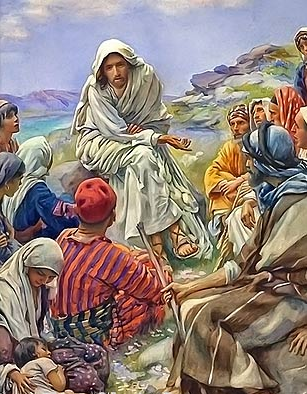
 Jesus teaching

“Lord, to whom shall we go? You have the words of eternal life." - John 6:38.

Who will show us any good? Where are we to look for the clearest, truest setting forth of his religion? 

There is such a variety of Churches, there are such differences of form and of creed, there is such a confusion of ecclesiastical tongues, and so many of them asserting that theirs is the only faith by which anyone can be saved.

And meanwhile, some think it doubtful if any faith can stand. Where shall we find some real light - some solid ground to rest upon?

Am I mistaken in saying that this is a craving widely felt at the present time?

The heart of society just now is in a curiously puzzled and perplexed condition. It is not satisfied. People have the answers of their various Churches. 

These tell them in creed and catechism, in article and confession, what it is that man must believe, and which shall be "saving faith” to him. 

And all the points are well backed up by “proof texts,” which sound clear and unmistakable; yet, when all is said, people are not satisfied.

It may not be that they have come to actually disbelieve these doctrines, but they do not feel that they go to the root of the matter.

Now I want to set before you what I believe to be the true way out of these doubts, the true way to this broader, simpler, more practical religion.

That way, I believe to be, to look simply to Christianity as Christ Jesus preached it; to go back, as near as we can, through the narratives of the Gospels, to Jesus as he went about among the people, himself preaching his own “good tidings" - his own religion. 

See what he himself said. how he answered people's questions; what he urged them to believe or to do, his beautiful, deep sayings. 

These an old saying: “The Bible, and the Bible only."  Well, I want to bring that idea to a brighter point still: “Jesus, and Jesus only, the special teacher for Christians.”

There is not a church throughout the world that does not claim Jesus as its teacher. The real difficulty occurs when we come to the practical application of it. 

Those four Gospel accounts of how he himself preached are sufficient in giving us Christianity as Jesus himself preached it.

A great deal of what passes for Christianity in the churches of the day will fail when tried by this test.

Always Jesus represents God as only wanting our repentance, waiting to forgive. There is never a word about the necessity of the penalty being paid; never a hint as to there being any hindrance to God's free mercy, except the hindrance of a hardness of heart.

I want to set before you the simple Gospel which Jesus Christ went about trying to persuade people to receive - the Gospel of love and practical righteousness.

Surely the very heart of it all, that which was the central light, was his sense of the infinite tenderness of God, and of the blessedness of living in His love, as His trustful and faithful children. 

Just let us recall the manner of our Savior's ministry, how he went about, what he taught the people:

Blessings on the pure in heart, the meek, the merciful, the peacemakers, exhortations to a higher righteousness than that of the Law as set forth by the Scribes and Pharisees; teachings about brotherly love – “leave your gift before the altar, and go and make up with your brother;" not doing anything “to be seen by others;" about the quiet charity that should not let the left hand know what the right hand does; about patience, and kindness - enforced by reminding them of God's kindness to all of us.

And the passage, "Not everyone that says to me Lord, Lord, shall enter into the kingdom of Heaven, but he that does the will of my Father in Heaven."

That sermon was what one may call the great proclamation of his ministry. Then, follow him in thought as he moves among the people, telling them of the priceless value of having the kingdom of God in their hearts. 

And always he turns around from these thoughts of the Heavenly Father's love, to appeals for our loving duty! God's part was free, unpurchased love; our part He says is practical righteousness.

Never from his teachings could that false idea of righteousness be learned, which places opinions above conduct.

And it was not his teachings alone. These teachings were uttered in something nobler than word. The teaching was done into life.

And the Life was more powerful than the word, and so it is not merely “Christianity as Jesus preached it,” but “as Jesus lived it,” that stands for us in the Gospels.

The more I look upon that life of such sublime strength, holy love, and deep, living wisdom, the more I think of what Christianity was as Jesus preached it, and the more I feel how poor our faith in Him has become.

Place first a faith in those grand, simple teachings of God's love and our duty, and hold them up before the world with all the power of your speech and of your life.

(Adapted from an 1875 sermon by Rev. Brooke Herford 1830-1903)

Sunday, December 25, 2022

Let Us "Welcome" The Adult #Jesus Too! #JesusFollowers


Today, on Christmas Day, we "welcome" Jesus into the world along with Christendom. This is a Jesus we already know, a man fully grown and with whom we are more than acquainted.

This isn't a baby we must perpetually welcome into our homes. In the rest of the Gospels, we are confronted instead with the adult Jesus.

Meeting this adult Jesus is difficult for many, and even frightens them to meet him as an adult and not a helpless, unassuming child, a God-man who need only be worshiped, not a master we are compelled to obey.

The adult Jesus scared the religious elites of his day because of what he asked, just as he scares the religious elites of today.

Jesus is an adult whom we must each decide whether to ignore, or to serve, as God intended us to do.

If we claim his name, and wish to be identified with it, we must not assume that admiring a baby in a manger is what God wishes. We must not delude ourselves that admiration - or even worship - is alone sufficient. We cannot ignore the adult Jesus, or prefer the baby instead of the adult.

The adult Jesus is hidden away by the religious elites. He scares them.

A fully human Jesus, fully grown, with a clearly understood, fully formed mission and a challenging religion of Good Works, scares them EVEN MORE!

So this adult Jesus isn't celebrated at Christmas. At all. And he rarely, if ever, makes an appearance the rest of the year, either.

So, just who is this Jesus?

Jesus, the adult, was of course born a baby, but he was born fully a human, of human parents, just as we were born. (He was recognized as such in the Gospels by his neighbors, by the Disciples, and by his parents.)

He grew in the knowledge of God and gained wisdom; he pleased God in all he did. When he became an adult, he was chosen at his baptism and anointed by God to be our Master, our Teacher, our Template and the Example of how a human being should live for the glory of God and most beneficially for our fellow human beings.

This Jesus is not the one created for us by Priests whom we must simply admire and worship from afar; unable to obey, unable to follow because he is so different, so distant, so alien.

We may instead celebrate the Jesus - a man called and chosen by God - whom we can fully love as our elder brother, and the one whom we can actively follow as our example in all things. We may become more like God because one of us has done it already, setting the example towards which we may strive.

Let us remember the birth, but also the adult life, of THIS Jesus, a Jesus worth celebrating on this Christmas Day, and every day.

Sunday, December 18, 2022

What Is Our True Nature? #JesusFollowers


A minister on the radio was heard saying that humans beings are all, morally, "condemned criminals" in need of "radical surgery." Holy mixed metaphors, Batman! Not only was that metaphor a language crime, it was theologically criminal, as well!

Fortunately for us, he is wrong. In fact, Jesus teaches just the opposite. Jesus, just like the Hebrew prophets before him, consistently taught that we are all free to choose either to do good or to do evil, and that we will be held responsible for those choices when we stand before God.

Let us quickly dispense with the idea that we are all condemned criminals. The only ministers who say this too readily discount the idea of our Heavenly Father's vast mercy, or are deliberately hiding this wonderful aspect of our Creator.

Of course, what this minister was really trying to imply is that we are all born under an imaginary curse, one that somehow makes us unable to do any good to please God, and that we are therefore born already condemned in the sight of God. 

This is scripturally false and logically nonsense.

That God made us free to choose and liable for our choices is one of the best attested facts of scripture - both the Hebrew scriptures and the words of our Master, Jesus, whom God chose to be our example and teacher in all things.

To claim that we are so damaged that we can do no good; that we cannot follow Jesus and do as he calls us to do, are man-made excuses for our failure to obey.

Not to mention, it makes Jesus into an unreasonable master, for commanding what (according to those ministers) cannot be done by us. That would mean that God knows we cannot do it, but had Jesus tell us to do these impossible tasks anyway. To "convict us." 

If God did this, and of we could not act Righteously, God would be the author of our sins, and an unfair judge. He would be solely responsible for our sinful actions, and not us, if we were unable by our very nature to obey what He and his chosen son have so clearly laid out before us to do.

It would also mean that Jesus was a liar, and his teachings calling is to do Good would be a mockery, too.

Without our freedom of Will and freedom to act, there can be no judgement of our actions by a moral God. But the good news is that we were created with the ability to choose.

This ability means that our choices have eternal meaning, and that the Good we do is not just a forced choice made by a domineering God, but instead, is a joyful and grateful response to God's love.

The Hebrew Bible is filled with examples of God giving us a free will and the freedom to choose. The story of Adam and Eve is all about our Free Will and ability to choose, and the Jewish people have always understood it that way.
Adam's poor choice didn't damage his children's, nor his descendants' ability to choose right from wrong. In fact, God is portrayed in Genesis as telling Adam's own son, Cain, that he had the freedom (and the duty) to do right or to do wrong, and to take the consequences of either choice. That, alone, ruins the concept of our alleged "moral inability" to do good, because of Adam's Sin.

King David is shown in scripture as sinning and doing evil deeds, but he repented, and God forgave him. He says in the Psalms that he stood after his repentance before God with "clean hands" and with righteous actions.

Isaiah teaches that we are to wash ourselves and make ourselves clean. If we are totally unable to do good, then what could this possibly mean?

Therefore, it is abundantly clear that the Hebrew scriptures teach nothing else except that we have the ability to act and to do good, and that we are commanded by God, our Creator, to do exactly that.

Jesus, also, teaches us that God wishes us to have willing hearts and to follow the path of righteousness through our actions.

We are, like King David, fully able to repent of our past mistakes, and to stop doing them, as in the story of the woman caught in adultery demonstrates. Jesus said, "Go, and sin no more." No radical surgery was required on her, simply a determination to repent to do good, instead. Radical action was required of her - and she was able to do it.

The kingdom of God is built through our deliberate righteous actions and good works done in accordance with the teachings of our Master, Jesus.

So, we see that the minister's foolish statement about "radical surgery" is another theological falsehood. While our wills may have been damaged by our past actions, that can no way mean that we have no ability to turn our lives around by reaching out to God and repenting. Jesus teaches that all may repent, and indeed must repent, of past mistakes, which are a falling short of the high standards God wishes for all of us.

And again, all the Hebrew Prophets and Jesus taught that sincere repentance is all that is required of us to begin turning our lives around toward godliness.

The Gospel that Jesus preached is a challenge to reach our full potential - how God wishes us to live our lives. The fact that many do not know that the Gospel is a challenge, and are unaware that Jesus' Gospel is fully contained in his words, doesn't make them criminals sentenced to death eternally. 

Instead, it makes them imperfect, because they are, out of ignorance, not following God's perfect path of righteousness. This ignorance is because wicked ministers have not taught them this Truth.

Those who are living imperfect lives don't need radical surgery as much as they need a radical reassessment of their lives. And they should be informed that there is a better way: to seek to live their lives in accordance with God's will. 

And those who are living an easy faith without challenge, who believe that good works are impossible (or something that we need not even concern ourselves with) fall grossly short of Jesus' teachings, often warping them beyond all recognition, or worse, ignoring or minimizing them.

These ministers, and their flocks, perhaps need a radical new faith, based on the challenging, joyful teachings of our Master, Jesus, who says emphatically that we are capable of doing all that he asks us to do and that we may do all that he has done. THAT is the True Gospel message. It is one worth sharing.

Knowing that Jesus pleased God in every way, and said that we may do the same, shows that God and the one He chose as our example have far higher confidence in us human beings than many ministers do.

Sunday, November 6, 2022

Stepping off the “Roman Road” and Following the Path of Jesus #JesusFollowers

Over the past century, Conservative Christianity is created it's own version of what Christ Jesus taught, and has very little to do with his actual words.

Here is a typical online description of the “Roman Road”: “All you have to do is accept that Jesus is your Savior, that you are a sinner, and he is the only way to get to heaven. The bible passage for the Roman Road to Salvation, Romans 10:9 says this: “That if thou shalt confess with thy mouth the Lord Jesus, and shalt believe in thine heart that God hath raised him from the dead, thou shalt be saved. Romans 10:9”

This Roman Road then explains the consequences of sin. Romans 6:23 says, "For the wages of sin is death, but the free gift of God is eternal life in Christ Jesus our Lord." This refers to spiritual death and separation from God for eternity.

Next, this Roman Road teaches how God has provided this instant version of salvation. Romans 5:8 states, "but God shows his love for us in that while we were still sinners, Christ died for us." While we deserve death, Jesus has offered a way of life. He alone has provided a sufficient (and easy) answer to the sin and spiritual death we face. 

The Roman Road then teaches how we can receive this easy salvation. Romans 10:13 adds, "For 'everyone who calls on the name of the Lord will be saved.'" Salvation is available easily and instantly to anyone who will turn to Jesus for eternal life (John 3:16). This occurs when we believe Jesus is Lord and that He literally came alive again from the dead.

Finally, the Roman Road shares the results of salvation. Romans 5:1 declares, "Therefore, since we have been justified through faith, we have peace with God through our Lord Jesus Christ." The result is a relationship with God. This includes peace (Romans 8:1) and eternal  security (Romans 8:38-39).

What’s missing here? Except for the quotation of John 3:16, out of context, Jesus’ words aren’t included in this method of salvation.

And what did Jesus say about this alleged “Road?”

Of course it was devised long after his ministry. But he did have something to say about Easy paths and Wide Gates like this. “NOT EVERYONE who says to me, “Lord, Lord” will enter the kingdom of heaven, ONLY those who do the will of the Father will enter.”(Matthew 7:21)  So much for merely calling upon the name of the Lord to “get saved.”

Also, in The Sermon on the Mount, Jesus had warned, “Enter by the narrow gate. For the gate is wide and the way is easy that leads to destruction, and those who enter it are many. For the gate is Narrow and the way is HARD that leads to life, and those who find it are FEW.” (Matthew 7:13-14) The Roman Road is advertised as an easy way to salvation, guaranteeing our seat in heaven by merely saying a few easy words.

How strongly this contrasts with what Jesus preached about a life serving him would be like! He portrayed it as a difficult yet rewarding struggle that ended in the Kingdom of Heaven. Doing the will of the Father means denying ourselves, leaving family behind, serving others as we would want ourselves to be served, and living and serving God completely.

Contrary to those who follow this Roman Road, Jesus clearly calls us to do good works and serve others with those good works, and explicitly says we will be judged by God by our works not our mere intentions or even our vain words.

Jesus calls on us to repent of our past misdeeds, and echoed John the Baptist’s preaching, ”bear fruit worthy of our repentance.” (Matthew 3:8)

All of his ministry is very far from this alleged Roman Road, and far from the preaching of today’s Conservative Christian ministers, who are preaching a very different Gospel than the one Jesus preached.

In fact, the  one time Jesus addressed personal salvation, (Mark 10:17-22) he told someone who wished to have eternal life to keep the Commandments.

Let's do that instead.