Showing posts with label refutations. Show all posts

Sunday, November 3, 2024

What Do We Owe God, And Others? #JesusFollowers


What do we owe to God? What do we owe to others? Many today might answer that we owe God and others nothing. Instead, they might say, we owe it to ourselves to focus on building up ourselves, alone.

This message is reinforced in almost every aspect of the society in whichwe live. Advertising tells us that we owe it to ourselves to seek to fill our every desire, without hesitation.

We are told that we deserve every luxury and every Indulgence of which we can think. It's very easy to fall into this trap, to believe that by gratifying ourselves that we will somehow be happy. 

Even some preachers teach that we owe it to ourselves to be rich - and that God endorses our quest for riches. They even say that our main religious goal in life is a Self-centered goal to "get saved," and save our souls for the next life. Once that's accomplished (and it's done quickly and easily, they claim - with just one prayer!) we may continue to focus on getting rich, and they tell us that we have no other obligations, to either God or other people.

And many church leaders rarely speak of OUR duties, but speak of, and sing about, holding GOD to HIS promises to us, which seems backwards. 

But as we have seen again and again, people who have lived in luxury beyond our wildest dreams have the same feelings of unhappiness, of being unfulfilled, of feeling alone and unloved that we all experience.

It's almost a stereotype and a truism that money and fame does not really bring lasting happiness. And yet some still believe it, and chase that false hope.

If we follow Jesus, however, then the question of what we owe God and what we owe others is a simple one to answer. We owe everything to God and we owe complete and total service to others in the name of Jesus, whom we are called to serve and emulate

When Jesus was asked what the greatest commandment was, he said that we are to love our God with all our hearts all our minds all our strength and all our understanding, and to love our neighbor as ourselves. (Matt. 22:37; Mark 12:29-31; Luke 10:37)

Some say this is just a simplistic and easy summary of all the laws of God. And while it is a summary, for sure, it is not simplistic, but an incredible, powerful challenge that Jesus calls us to take up daily.

Because if we owe everything to God, our creator, we will live our lives full of gratitude to him for His creation and our lives in it. If we owe everything to others, we will serve them and love them and cherish them. We will do everything to comfort them, to ensure they have what they need to survive and spiritually thrive in this world.

When we understand that our lives here are meant to build up an Earthly kingdom of God, one that reflects the spiritual Perfection of our Creator, we will do all we can to alleviate others' suffering, comfort those in pain, and fill the needs of  those who lack basic necessities. (Matt. 6:10)

This leaves little room for simply piling up riches. In fact, Jesus repeatedly calls on us to reject riches for riches' sake, saying (perhaps most clearly) that it's easier for a rich man to go through the eye of needle than to enter into the Kingdom. (Mark 10:25) 

Perhaps not as well known, but just as important, is his warning that we ought to, "be on your guard against all covetousness, for one’s life does not consist in an abundance of possessions." (Luke 12:15)

This is the selfless vision and the mission Jesus was sent out to preach. Jesus calls us to individually reach out to those among us and serve them. We literally owe it to others to do so. 

We as Jesus followers are called to deny ourselves, not focus on gratifying ourselves - to put others first, even ahead of our own enrichment. Jesus calls us to pick up the cross of service, the cross of love, and the crosses of self-sacrifice and love of our neighbor.

Jesus actually warns AGAINST seeking to save oneself. To do so means we will actually lose ourselves. (Matt. 10:38-39) Jesus seemed to know that we lose our souls when we focus inward, not outward.

And he specifically says that simple praise, crying out or reflexively using repetitive phrases or long prayers will not impress God, and will not save us, either. Only by doing what he commands us to do leads directly to Godliness, and pleases God. (Matt. 6:7; 7:21-23; Luke 6:46)

We should seek to live in a way that lets God's spirit flow through us in the same way in which it flowed through Jesus, our Master. 

When we do this, we are obeying our Master, whom God sent to us as an example and our teacher. We are then telling God that we are living lives of gratitude and service, just as his chosen son, Jesus, called us to do.

As his followers, we ought to do no less.

Sunday, October 27, 2024

The Nature of Gospel Salvation. #JesusFollowers


The Gospel presents us with clear and comprehensive views of the Nature and character of the Deity. 

It teaches that there is but one God: by this simple principle, expressed in every way which is necessary to make it fully understood and cordially received, putting an end to heathen idolatry.

It teaches us that this great Being is a Spirit; possessed of every natural and moral excellence in an infinite degree; almighty, all-wise, all-just, all-holy, and all-gracious; exercising a righteous moral administration over His creatures; rewarding the righteous, and punishing the wicked.

In short, He is perfect goodness, pure and unlimited Love, our Friend and our Father; yet at the same time a Being of perfect Righteousness, our Sovereign, and our Judge.

The Gospel teaches us what the requirements of this great and gracious Being are. It instructs, by precept and by example, that we should love Him with supreme affection; that we should exercise a steady faith and a devout and holy communion with Him; and that we should make it our first and highest concern to do His will.

It requires that we should exercise a careful government over our own hearts; that we should suppress all inordinate affections and all high thoughts of ourselves; that we should be sober, temperate, and chaste in all things; that we should be humble and watchful, earnestly desirous to be, as well as to do, what God commands. In short, the religion that is pure and undefiled before God is to keep oneself unstained from the world. (James 1:27)

Jesus is never represented as the cause, but as the effect of the Father's love: and to imagine that God was not disposed to be merciful to mankind till Jesus wrested pardon from him (as it has sometimes been expressed), is to contradict the simple but all-important assertion of the Gospel, that "God so loved the world…" (John 3:16)

It is nowhere stated in the Scriptures that God could not forgive sins without the death of Jesus, or without some other full satisfaction: but many passages prove that though perfectly just, God is also essentially merciful; and which supply us with Divine declarations of pardon to the repentant sinner, and examples of the extension of it, without any reference to the death of Jesus.

The justice of God, as far as we have the means of knowing, consists in the due distribution of rewards and punishments according to the moral condition and character of the objects of His justice.

Jesus suffered for the completion of his spiritual excellence, and it was for the welfare of his followers that he should set them an example that they should follow in his steps – an example of meekness, of fortitude, of patience, of gentleness and mercy, of firm endurance and self-denial, of boundless love to man, and of obedience unto death.

When considering the effects and purposes of the death of Jesus, it should never be forgotten that they were all in view in the apostles’ minds, as a whole, as they should be in ours; and then we cannot fail to perceive that the effects on the spiritual excellence of our Master’s character, and the perfecting of his example, and all their blessed influences in the hearts of his disciples, are among the purposes of his death.

The death of Jesus is of service to only those who through the work of Jesus are redeemed from all iniquity; and its efficacy in effecting our salvation depends on its producing, through the influence of his sufferings, his precepts, doctrines, spirit and example, that spiritual sanctification, and eternal purification, which will make us dead to sin, and alive to God.

If neither our Master himself, during his ministry on earth, nor his apostles whose preaching is recorded in the book of Acts teach the doctrine that the death of Jesus was a substitutionary sacrifice for the sins of men, is it reasonable to conclude that it cannot be essential to salvation?

There is no passage in support of the doctrine that the death of Jesus had some mysterious, unknown, immediate efficacy in obtaining from God the pardon of sin.

Persons who entertain this doctrine of atonement, should shrink from the notion that Jesus was in any strict sense punished for the sins of men, or that he was substituted for them to bear the Father's displeasure, or that he thus made satisfaction for their sins: still less should they allow that the death of Jesus appeased the wrath of God, and made him merciful.

Of such a doctrine, often taught by theologians, I do not hesitate to declare that it is not Christianity, that it is not Judaism, that it is heathenism.

(Adapted from an 1843 sermon by Rev. Lant Carpenter)

Sunday, August 18, 2024

#Jesus' Words - Was He Just Mocking Us? #JesusFollowers


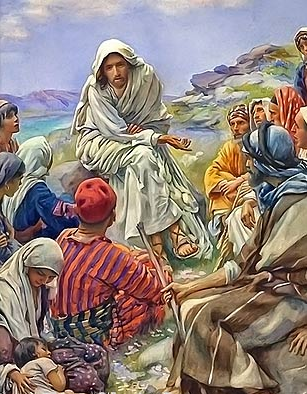
The book of Matthew (chapters 5 through 7) records Jesus’ words in a well-known series of chapters known as the Sermon on the Mount.

Jesus went up on a small hill and began preaching, and what he said amazed the assembled crowd who heard it.

It amazes us, still.

Jesus’ teachings were both shocking and clear to those who heard them; startling statements meant to both spiritually awaken and challenge us to action.

He started by teaching about the character that God wishes us to have. In these “beatitudes,” Jesus assures us that God sends blessings of comfort, hope, healing, love, and strength, and that God expects us to share these blessings with others.

Jesus calls us to become both salt and light – spiritually enriching the world by being great moral examples to it - and says that we can do this by humbly performing righteous deeds. 

Our attitudes towards oaths, marriage and even our dealings with our enemies, he says, ought to be guided by extremely high ideals, not by shallow obedience alone.

But just because this challenging sermon IS so challenging, some scholars and churchmen throughout history have questioned whether it REALLY should be taken seriously by us at all.

For example, some have claimed that Jesus' teachings in this Sermon were not meant to be followed, but instead, his intention was to merely show us what we COULD NEVER accomplish, because all human beings are too corrupted to obey his teachings.

When Jesus said we should avoid even thinking of committing adultery - an act that is one of God's Ten Commandments to Moses - they claim that we couldn't possibly avoid thinking of such a thing. Therefore, they assert, Jesus was teaching that human beings couldn't possibly do what he was asking.

But to believe this would make Jesus a mean-spirited, cynical teacher. And indeed, most who believe this way don't see him as much of a teacher at all, but as someone who’s just mocking (or "convicting") us by spouting high ideals that are beyond our ability to obey.

This kind of teacher would seem mean and sadistic in a classroom, and insane standing on a hill claiming to be a religious Teacher from God.

A teacher who would mock us by teaching what we cannot follow (and then teach that we'd be punished by God if we didn't follow!) would be the worst of all teachers, and certainly not a prophet sent from God.

Of course, Jesus, our God-anointed Master, never said his teachings were impossible for human beings to follow, so we can easily reject this interpretation. Jesus said, "follow me," and "obey my teachings," and "let your light shine before others."

It's reasonable to take Jesus at his word, that he wants us to strive for even higher ideals than simply not cheating on one's spouse. He calls us to purify even our thoughts, not just our outward deeds.

This is consistent with his other teachings, in which he condemns the Judean religious teachers known as the Pharisees for having an outward appearance of goodness, like "a whitewashed tomb" he said, but inside, their minds were full of corruption and evil. 

This imagery clearly illustrates what he means by his teachings on the Mount, and elsewhere. 

We start the process of committing a sin by thinking about it, and dwelling upon it. Jesus knew this, and warned us to guard our thoughts just as we are to guard our actions.

"Out of the good treasure of our hearts," put there by our thoughts, come goodness in the form of good works that serve others and please God.

We can be assured that Jesus meant what he taught at face value, and when he says that we can become morally and spiritually complete, and that we can do all the he did during his ministry, we can rest easy knowing that he is not lying to us or mocking us.

Sunday, July 28, 2024

What Does God Think We Can Do? #JesusFollowers


Just a few verses into the Hebrew Bible, in the book of Genesis, there is a well-known story that has valuable lessons that, if better known, could change the way we understand God, our human abilities, and our responsibilities as God’s children.

The story of Cain and Abel – well known as an allegorical tale of brotherly strife – begins with both brothers offering up a sacrifice to God. Abel offers up animals on an altar, while Cain offers fruits and vegetables. However…
"[Yahweh] didn’t respect Cain and his offering. So Cain was very angry, and the expression on his face fell. And Yahweh said to Cain, "Why are you angry, and why has your face fallen? If you do what is right, will you not be accepted? But if you do not do what is right, sin is crouching at your door. It desires you, but you must rule over it." (Gen. 4:5b-8)
The story goes on to tell how the angry, confused Cain sought out and murdered his brother Abel. God then finds Cain in hiding, and asks him where his brother was. Cain answered with that well-known line (as if he was innocent of the crime) "Am I my brother's keeper?" God then punishes Cain by marking him for all eternity.

So, what lessons does this story teach us, today, about human beings, and our abilities?

First, God laid out two paths of action to Cain, equally offering acceptance (to be “Lifted” in the Hebrew, meaning exalted) if he had chosen to do what was right.

God also told Cain he had the ability to RULE OVER or “master” sin, if he chose to do it.

God’s offer of acceptance to Cain, and the choice he was given, prove that he had the ability to do what is right – and so do we.

But this simple lesson has been invisible to many religious teachers, who have long denied that we as human beings have the ability to choose to do what is right.

Some – living hundreds of years after Jesus' ministry – taught that Cain’s father, Adam (the first human being, along with Eve, in the book of Genesis) sinned against God. This, they say, caused all of his descendants, including us, to be UNABLE TO AVOID SINNING.

They also taught that this inability was passed on to us through our ancestors when they had sex. This is the teaching of Martin Luther, John Calvin, and all modern Protestant and Catholic churches.

If this is true, then we are powerless to avoid sin – and powerless to do what God commands us to do.

But the actual words of this story blow apart these man-made theories.

Cain, the very child of Adam in this story, had the ability to NOT kill Abel, had he chosen that option. He was assured by God that he could CHOOSE to not sin, and in fact, said he MUST do so, to avoid punishment.

This story teaches us volumes about God’s nature, as well as human nature. God created us to obey His moral commandments. And because God is our Creator, He knows of what we are capable, and calls us to seek out His holiness and obey Him.

Rather than telling his disciples that we could do nothing EXCEPT sin, Jesus – the one whom God chose as our example and teacher and anointed as His spokesman – taught them, and through them, us, that we are to be "perfect, as your Father in Heaven is perfect." (Matt. 5:48)

And the one who said he did all things that pleased God also said that we must follow him, doing all that he had done. (John 13:15; 14:12)

In saying this, Jesus echoed all the Hebrew prophets who had come before him - because he did not teach anything new about our ability to obey God that was not already known.

In the Hebrew Scriptures, we are assured that God's commandments are, "not too hard for you," and "The word is very near you. It is in your mouth and in your heart, SO THAT YOU CAN DO IT." (Deut. 30:11, 14) Isaiah writes, "Wash yourselves, make yourself clean. Put away the evil of your doings from before my eyes. Cease to do evil. Learn to do well." (1:16)

The Psalmist writes: "Surely there is a reward for the righteous; surely there is a God who judges the earth." (Psalms 58:11)

“He has shown you, O man, what is good," writes Micah (6:8)

We are called upon to "Hate evil, and love good" says Amos (5:15)

"Choose this day whom you will serve," says Joshua (24:15)

"If you choose, you can keep the commandments; and to act faithfully is a matter of your own choice. Set before you are fire and water; to whatever you choose, stretch out your hand. Before everyone are life and death, whichever they choose will be given them." (Sirach 15:15-17)

Therefore, while sin may be waiting by the door for us, seeking to master us, we may indeed defeat – and master – sinful temptations. We HAVE THAT ABILITY, given to us by our Creator!

If we have damaged this ability because of our past behavior, God will grant us greater moral strength when we ask (Psalm 138:3; Prov. 2:6; James 1:5)

That we have this ability born within us is amazingly good news, because it shows that our Creator knows us, and still gives us the freedom to act and choose to obey Him freely!

Through the teachings of our Master, Jesus, we know that God is like a parent, Who allows His children to make mistakes, repent, and turn back to doing what is right and good.

We should thank God, our Creator, in Whose image we were created, for trusting us to make our own choices, and let's pledge to always take that awesome responsibility seriously in all that we do.

Sunday, July 21, 2024

What Is Our True Nature? #JesusFollowers


A minister on the radio was heard saying that humans beings are all, morally, "condemned criminals" in need of "radical surgery." Holy mixed metaphors, Batman! Not only was that metaphor a language crime, it was theologically criminal, as well!

Fortunately for us, he is wrong. In fact, Jesus teaches just the opposite. Jesus, just like the Hebrew prophets before him, consistently taught that we are all free to choose either to do good or to do evil, and that we will be held responsible for those choices when we stand before God.

Let us quickly dispense with the idea that we are all condemned criminals. The only ministers who say this too readily discount the idea of our Heavenly Father's vast mercy, or are deliberately hiding this wonderful aspect of our Creator.

Of course, what this minister was really trying to imply is that we are all born under an imaginary curse, one that somehow makes us unable to do any good to please God, and that we are therefore born already condemned in the sight of God. 

This is scripturally false and logically nonsense.

That God made us free to choose and liable for our choices is one of the best attested facts of scripture - both the Hebrew scriptures and the words of our Master, Jesus, whom God chose to be our example and teacher in all things.

To claim that we are so damaged that we can do no good; that we cannot follow Jesus and do as he calls us to do, are man-made excuses for our failure to obey.

Not to mention, it makes Jesus into an unreasonable master, for commanding what (according to those ministers) cannot be done by us. That would mean that God knows we cannot do it, but had Jesus tell us to do these impossible tasks anyway. To "convict us." 

If God did this, and if we could not act Righteously, God would be the author of our sins, and an unfair judge. He would be solely responsible for our sinful actions, and not us, if we were unable by our very nature to obey what He and his chosen son have so clearly laid out before us to do.

It would also mean that Jesus was a liar, and his teachings calling is to do Good would be a mockery, too.

Without our freedom of Will and freedom to act, there can be no judgement of our actions by a moral God. But the good news is that we were created with the ability to choose.

This ability means that our choices have eternal meaning, and that the Good we do is not just a forced choice made by a domineering God, but instead, is a joyful and grateful response to God's love.

The Hebrew Bible is filled with examples of God giving us a free will and the freedom to choose. The story of Adam and Eve is all about our Free Will and ability to choose, and the Jewish people have always understood it that way.
Adam's poor choice didn't damage his children's, nor his descendants' ability to choose right from wrong. In fact, God is portrayed in Genesis as telling Adam's own son, Cain, that he had the freedom (and the duty) to do right or to do wrong, and to take the consequences of either choice. That, alone, ruins the concept of our alleged "moral inability" to do good, because of Adam's Sin.

King David is shown in scripture as sinning and doing evil deeds, but he repented, and God forgave him. He says in the Psalms that he stood after his repentance before God with "clean hands" and with righteous actions.

Isaiah teaches that we are to wash ourselves and make ourselves clean. If we are totally unable to do good, then what could this possibly mean?

Therefore, it is abundantly clear that the Hebrew scriptures teach nothing else except that we have the ability to act and to do good, and that we are commanded by God, our Creator, to do exactly that.

Jesus, also, teaches us that God wishes us to have willing hearts and to follow the path of righteousness through our actions.

We are, like King David, fully able to repent of our past mistakes, and to stop doing them, as in the story of the woman caught in adultery demonstrates. Jesus said, "Go, and sin no more." No radical surgery was required on her, simply a determination to repent to do good, instead. Radical action was required of her - and she was able to do it.

The kingdom of God is built through our deliberate righteous actions and good works done in accordance with the teachings of our Master, Jesus.

So, we see that the minister's foolish statement about "radical surgery" is another theological falsehood. While our wills may have been damaged by our past actions, that can no way mean that we have no ability to turn our lives around by reaching out to God and repenting. Jesus teaches that all may repent, and indeed must repent, of past mistakes, which are a falling short of the high standards God wishes for all of us.

And again, all the Hebrew Prophets and Jesus taught that sincere repentance is all that is required of us to begin turning our lives around toward godliness.

The Gospel that Jesus preached is a challenge to reach our full potential - how God wishes us to live our lives. The fact that many do not know that the Gospel is a challenge, and are unaware that Jesus' Gospel is fully contained in his words, doesn't make them criminals sentenced to death eternally. 

Instead, it makes them imperfect, because they are, out of ignorance, not following God's perfect path of righteousness. This ignorance is because wicked ministers have not taught them this Truth.

Those who are living imperfect lives don't need radical surgery as much as they need a radical reassessment of their lives. And they should be informed that there is a better way: to seek to live their lives in accordance with God's will. 

And those who are living an easy faith without challenge, who believe that good works are impossible (or something that we need not even concern ourselves with) fall grossly short of Jesus' teachings, often warping them beyond all recognition, or worse, ignoring or minimizing them.

These ministers, and their flocks, perhaps need a radical new faith, based on the challenging, joyful teachings of our Master, Jesus, who says emphatically that we are capable of doing all that he asks us to do and that we may do all that he has done. THAT is the True Gospel message. It is one worth sharing.

Knowing that Jesus pleased God in every way, and said that we may do the same, shows that God and the one He chose as our example have far higher confidence in us human beings than many ministers do.

Sunday, June 30, 2024

#Jesus: A Teacher, Unlike Any Other #JesusFollowers


Jesus stands as a unique figure in world religions. To follow Jesus' teachings is to accept a challenge that is unlike any other religious teacher, because he is unlike any other teacher. 

No other teacher has called us to live lives of radical love - a love that dares equate what we give to our neighbors, to strangers, and even to our enemies, to what we give our SELVES. (Mark 12:31)

No other teacher has called us to live lives of radical service - a service that leads us to think of Others first, to deny our own needs, to care for all who are suffering and in need, and to always do more than is required. (Mark 8:34; 9:35; 10:43-45)

And no other teacher has called us to live lives of radical obedience - serving God completely, repenting of our past sins, seeking Heavenly, rather than Earthly treasure, and striving to live in complete and perfect obedience to God's will. (Matt 4:17; 6:19-20; 28:20)

No other teacher has set himself up as a perfect example for us to follow. Jesus says he always did what was pleasing to God, and he calls us to follow him in all things. (John 8:29; 14:24)

Jesus is a God-anointed teacher, and not "merely" a teacher, though merely a man, like us. Jesus, unlike any other religious figure, calls us to imitate him. He says we can do all that he has done, and calls us to a challenging, active religious life. (Acts 2:22; 13:23; John 13:15; 14:12)

The words he spoke were grounded in his Father and ours, God. God’s moral teachings were shown in Jesus’ teachings more clearly and purely than in any other human being.

To call ourselves his friends and followers, then, is the most important thing we can say, because these teachings of his are the most pure, most Godly and therefore most important teachings ever shared amongst the human race.

Jesus said he shared all things with us, saying, "I have called you friends, for everything that I learned from my Father I have made known to you." (Matt. 15:15)

And Jesus taught that to preach God's good and beneficial message (Gospel) was the reason he went out to the villages of Judea. It consisted of his entire mission, and that was the only thing he came to do. (Mark 1:38; Luke 4:18-19)

To speak of Jesus' blood saving us in some way apart from obedience to his teachings is meaningless. Unless we honor both the life that his blood sustained, as well as his teachings that revealed God's will for our lives, we are not changed by Jesus and our hearts are not turned back to obeying God's moral Law.

His life and his death serve equally as examples of supreme love and self-sacrifice, because Jesus said, "Greater love has no one than this, that he lay down his life for his friends," and also, "You are my friends, IF you do as I command you." (John 15:13-14)

Everyone who hears his precious teachings, says Jesus, but does not act on them, "will be like a foolish man who built his house on the sand." (John 7:24)

The Gospel IS Jesus' teachings. It can be based on nothing else, and no other man's Gospel than the one Jesus preached can be put in its place. We, therefore, have one master, one Gospel and we serve one God, the God Jesus himself worshiped and calls us to love with all our heart, mind, soul and strength.

Sunday, June 2, 2024

The Pure, Simple Faith #Jesus Taught! #JesusFollowers


To promote real morality and true piety, we can conceive nothing so well fitted as the simplicity of Jesus - the plain, unequivocal, uninvolved requirement of love to God, tested by love to others and active usefulness in life. 

How utterly simple and plain, how free from all subtlety and dogmatic obscurity, is the teaching of Jesus.

His Sermon on the Mount is indisputable, practical, simple, having no abstruse, remote, or novel concepts. It proclaims no ideas that amaze or confuse, nor does it call for careful consideration on account of its novelty. It is a solemn, searching declaration of the universal religion of humanity. 

In it, he proclaims that God is holy, wise, good; blessed are you if you are pure, meek, hungering for righteousness, and living from the heart pure, useful, holy lives. This is all the doctrine there is in it ; not a word about the nature of the Godhead, the fall of man, the need of the atonement, the deity of Christ, the necessity of baptism and the saving sacrament of the  communion.  

Jesus was no scholar. He spoke the language and the truth and the religion of a simple, deep-thinking representative of universal humanity - true always, everywhere, and for all. There is nothing to add, nothing to take away, nothing to excuse or to explain away in his clear teachings. 

His teachings do not need any changes for the times, or the nation, or the circumstances, to account for them. It is because they give voice to what humanity knows and feels to be deepest and holiest, that they hold the allegiance of the Twenty-first, just as they will for those living of the Thirty-first Century. 

We cannot conceive of anything pertaining to our religious wants or our religious faith that do not already exist in the precepts, spirit, and example of Jesus.

We can very easily make the clear, simple, moral fact precisely what we choose to have it by enough twisted reasoning. And as we consider our consciences, so we are apt to consider our religion. God has pronounced it simple, plain, unmistakable. Jesus has taught and illustrated it in ways a child can understand. But it is so plain that it becomes severe; so simple that it looks cold and hard, like a marble statue.

We often hear the simplicity of Jesus as it reveals itself in the Sermon on the Mount compared disparagingly with the complicated faith of the Nicene Creed. But what can we call “the Christian religion” except that which really adds nothing to the old Jewish and the older natural religion of love to God and love to man, except the example and spirit of Jesus! 

What becomes of the Fall, and the Curse, and the Atonement, and the Sacraments, and the Trinity, and the Deity of Christ, and all the rest of the dogmatic paraphernalia of religion? They become invisible, like candles in the presence of the sun. 

It is the keeping of these great commandments that discloses their richness and fullness. They are simple, few, and concise. But live by them, and you will find that all the bodies of divinity in the world could not contain their lessons, or describe the glorious richness of their contents.

Do not allow yourselves to fall under the dominion of these high-sounding subtleties, these dark dogmas, these involved metaphysical puzzles, which pass for religion and Christianity. They will unsettle your common sense, and fog up your conscience, and finally make you think religion is not the plainest thing in the world - a highway, in which the wayfaring human, though a fool, need not err, — but an enigma and a riddle, a sphinx which you must helplessly bow before and adore, though it will answer no question you put to it.

It is not the unknown we can profit by, but the known. It is not the obscure, but the plain, that should have our attention. It takes no learning, no scholarship, no formal logic, no fine-spun reasoning, to know God so far as we need to know Him, as a moral governor and Father of our spirits; to know Jesus as a holy, gentle, and wise master and guide of character; to know our duty well enough to live chastely, truthfully, honestly, with mercy and sympathy.

(Adapted from a sermon by Dr. Henry W. Bellows)

Sunday, May 5, 2024

Some False Doctrines Churches Teach [#JesusFollowers]


If you hear sermons from the pulpits of Western Christian "Churches," or if you've ever picked up a "fundamentalist tract" on the ground or in a public bathroom, you may be hearing many falsehoods that Jesus never preached as part of his Gospel. Here are a few of them, and wh you ought to reconsider basing your faith on them. (Or on anything other than the words of Jesus.)

1. "Jesus teachings are 'for the Jews' but not for us, Today." 

This was debunked by Jesus, himself, who said his words would never pass away, and sent the Jerusalem Apostles out into the world in his Great Commission to tell people to obey his teachings. That's Not "just for the Jews." He did say for the Apostles to go to the Jews FIRST, which they did. 

2. The late theologian John D. MacArthur infamously said, "Christianity has nothing at all  to do with the teachings of Jesus."

What he meant as a statement of theology is actually true of modern Christianity, but that's a fact we should mourn, not celebrate. Denying Jesus or putting his life story first, which MacArthur taught, and most Christians believe, is false.

3. "We Inherit Adam and Eve's "Original Sin" at Birth and it means we are Cursed, Cannot Obey God, and Are Totally Depraved, unable to do any good."

Variations of this is taught in churches, but not often said out loud or in these words. None of this is consistent with Bible teaching. God told Adam's own son that he would be rewarded if he did what was right, but he would be punished if he did what was wrong. Catholic "Church Father" Augustine of Hippo wrote of Cain, and us, saying it is, "non posse non piccare" (not possible (for us) to not sin." And this became Catholic Doctrine in the early Fifth Century, despite contradicting God's  very words in Genesis. Who will You believe? 

4. "The Bible's High standards of morality, especially in Jesus's teachings, were simply meant to "convict" humans and aren't meant for us to obey, because we are morally unable." 

This man-made nonsense turns the entire Bible on its head and makes Jesus and the Prophets into liars. If we are unable to do these things, calling on us to do them is sadistic of God, His rules would be pointless, and his punishments for failing would be unjust, if his words were impossible to obey. Of course, this isn't the case.  

5. "Jesus Forgot To Teach That He Was Part of a Godhead or that he was a Person in it, Equal to God.

 Jesus told the Apostles that everything he heard from God, his Father, he told to them. He didn't forget to mention these things about a Godhead, or that he had actually created the world. Why wouldn't he tell them outright that he had created the world? Clever men today may twist his words, just as the religious teachers of God's day tried to do,  or use other men's words to imply otherwise, but we follow Jesus, who said he had a God, and prayed to God, Whom is his God? Our Father. And his.

EVERYTHING.

Yet, Jesus said not one word of being part of a Godhead in which he shared the "substance of the Father " and a "person" called the Holy Spirit nor was this written by the Gospel book writers, because this definition of a Godhead wasn't invented until the 4th and 5th centuries by clever philosophers, turning spiritual and theological phrases into literal ones. Jesus said he was one with the Father, but also that he wanted his disciples to be one with him,  just as he was one with the Father. 

6. "Make war With Your Prayers. Be "Prayer Warriors " for Christ."

That phrase never occurs in the Bible, nor is it a strategy suggested by Jesus. But many "Prayer Warriors" today use prayer as a weapon.  Jesus calls us to pray FOR our enemies, and bless those who curse us, not use prayer against them. Adversaries of Good are defeated by our Good deeds in the world, not hateful vibes sent out to God, directing Him to do our bidding.

7. "Jesus Was Born Of A Virgin on December 25th as a star moved over his stable and God Was His Father, Not Joseph. Jesus Was the Legitimate King Of The Jews. God Impregnated Mary, A Virgin, Became A Man  Jesus Was The God-Man: Both Man And God."

Sorry to ruin Christmas, but... Propagated by Catholic Second Century Christians, this collection of pagan stories are recited every Christmas as if they are Historically accurate. But it's all based on a false translation of a line in the Old Testament (Isaiah 7:14) that didn't apply to a future Messiah figure, it certainly did not apply to Jesus, the Hebrew word, "Almah" used by Isaiah simply means "young woman," but was mistranslated in the Greek Septuigaint version as "virgin" and subsequently "Matthew" and Luke spun the yarn of a virgin conception and birth.

8. "Jesus' Death Gave God Permission To Forgive Human Beings." 

This silly and blasphemous statement is made by Televangelists of our own age, but not by Jesus, our only teacher, who said we must forgive 70x7 times. 

These same men teach, "Only God Can Forgive Sins, " just as the Jewish opponents of Jesus also said about him.  While it's true that we can't forgive sins others commit against God, Jesus says we must forgive others IF we wish God to forgive us. 

9. "The Devil Is the Ruler Of The Earth."

 A false and foolish saying, refuted by Psalm 24: The earth is Yahweh's and all that is in it, the world, and those who live in it." False teachers of darkness preach this today as a way to put Jesus higher above humans, and make God seem more aloof. They don't need the help and God is spiritually alive in us, here on the dirty, filthy old earth of His.

10. "The Bible has been Preserved by God Just As It Was In Jesus' Time." 

The Bible in Jesus's time was just the Hebrew Scriptures, and even that collection of books wasn't canonized (collected and approved by a council of Rabbis) until the Second Century, AD. And think about this: no one carried around printed Bibles until modern times. The New Testament contents weren't finalized until AD 367 by a Catholic Council. The Eastern Orthodox Church, to this day,  uses a Bible with several books that were never in the Catholic Canon.

And several books used by all churches today (including Jude and Hebrews) were almost left out of the Canon, while others (like 1 Clement and Shepherd of Hermas) were widely used by many churches in the first century, but were eventually dropped. During the Reformation, Martin Luther wanted to leave the Revelation of John and the Letter of James out of his German translation, but was convinced to leave them both in. 

In England, the books of the Apocrypha were quietly dropped from the King James Bible in its 1750s revision. Why didn't God keep all these books in? This doctrine is clearly false.

Sunday, March 31, 2024

The Proper Humanity Of #Jesus. #JesusFollowers


To entertain all just, honorable, and worthy notions of Christianity, as it is represented to us in the writings of the New Testament, is certainly a matter of the highest importance to humanity.

And it is no less certain, that all wrong and mistaken notions of it must be, more or less, hurtful and prejudicial to the interests of true religion.

Especially when they are received, as sacred Truths, or scripture Truths, and when those who have once imbibed them, or have been bred up in them , are afraid to examine them with the freedom and impartiality which they ought to do.

But so it is, and much to be lamented, that the scriptures have, at all events, been made to fit in with human systems, creeds and confessions, which have been taught and set up in lieu of them.

And these are not only contrary to the real meaning of the sacred writers, but in many respects absurd and inconsistent in themselves, and even repugnant to the most fundamental principles of all religion, both natural and revealed.

Such articles are consistent with human contrivance, and not the scriptures of truth, which are the only criterion by which to judge of the true, sound faith.

Now, since the doctrine of the UNITY, or of one God, is the first and chief article, and has been always allowed to hold the first place, in every creed, this will naturally introduce the immediate and present design of this paper, by leading us to make some interesting and serious reflections, which must, I think, be very plain and obvious to a common understanding.

If the Unity of God then, is the first and leading principle in religion, and the truth of this article was never once called in question by those who have been most divided in other matters, I may fairly ask, what a weak and groundless opinion must that be which many have entertained concerning "person of Christ,"  As if
 he, the man Christ Jesus, differed from all other men, in having two distinct natures, the human and the divine, or that of God and man, essentially and personally united!

This, I am truly persuaded, has led many pious, well-meaning persons, through the strength of custom and prejudice, or the lack of honest and free enquiry, to put a wrong, and often absurd sense upon many passages of the New Testament.

I would be far from entering into quarrelsome contention with any who may differ from me in their religious sentiments.

But I may be allowed to expostulate and reason a little upon the point itself, without giving reasonable or just offense to any, and especially, as I apprehend it to be a matter of moment, and what ought indeed to be maturely weighed, and well understood, if we would be ever able rightly to interpret that revelation which God has given us, or to set the doctrines of the New Testament in a consistent, easy, and amiable light.

I would therefore fain learn, where we have any ground to believe what is called the "hypostatic union," or a duplicity of natures in the person of Christ.

Was it not as man, and in that nature only, that Christ here prays to God as his Father in the Gospel of John? And had he not hereby taught us, even all his disciples and brethren, to pray in like manner to that same almighty Being, whom he expressly styles his God and our God, his Father and our Father (John 20:17)

The doctrine of his strict and proper humanity from this, as well as many other places, is very apparent to the understanding and reason of every man.

Or where it is that we are taught or instructed in any part of scripture, to speak of Jesus, as many of our divines have done, sometimes as God, at other times as man - a mere imaginary distinction this such as only tends to embarrass and confound, but it is far from conveying to the mind any one clear, rational, or instructive idea concerning, either the one God, or the one Lord Jesus Christ.

Our Savior prays, "My prayer is not for them alone. I pray also for those who will believe in me through their message, that all of them may be one, Father, just as you are in me and I am in you. May they also be in us so that the world may believe that you have sent me." (17:20-21)

Does he then pray to himself? Reason and understanding recoils at such an unnatural perversion, such a distortion of ideas!

Let learned and inquisitive men argue and debate this matter as long as they will, this must always pass with me for an axiom, or an indubitable self-evident truth, that Jesus and his Father are two beings, two distinct natures.

("A Comment On Some Remarkable Passages Of Christ's Prayer At The Close Of His Public Ministry," by Rev. Paul Cardale, 1772)

Sunday, March 24, 2024

Welcoming the Wrong Messiah - Both Then and Now #JesusFollowers


As Jesus entered Jerusalem on that last week of his life, his disciples were joined by the many who had heard and seen him preach in Galilee and those who heard about his fame far beyond that region. And they rushed to welcome him.

Surely they had heard of his teachings and his works, and believed him to be the Messiah. And so he was. Today, we understand his Messiahship clearly when he said he was sent by God, Whom he called The Father, to rescue us from our sins and call us to repent and turn back to God. 

He proclaimed God’s Kingdom, and said it was both within us and among the people in the form of himself. And he called disciples to follow him in creating this Kingdom and spreading it throughout first Judea and then the earth.

But that wasn’t what many had in mind that day as they welcomed him and proclaimed him “King.” They sought a military leader, someone who would lead a military revolt and overthrow the Romans, re-establishing a literal kingdom of Israel, and bringing justice by the sword, not by words of peace.

And within days, almost all of them would be going home disappointed – saddened that THIS Messiah would not be leading a military revolt. They had somehow drastically misread the clear words of Jesus, and their failure to listen would have grave consequences for them and their nation.

Jesus was always very clear about his mission. He was clear that this Kingdom was to be brought into this earthly reality by our deeds and actions by following God’s Moral Commandments, and that we would all be judged by those deeds to be deemed worthy to enter in to Eternal Life.

His kingdom was “not of this world” and that which belonged to Caesar should be given to Caesar. Every opportunity he was given to sow sedition against Rome, he instead spoke of peace and individual repentance from individual sinful behavior. That’s not the preaching of a revolutionary, conquering Messiah.

Perhaps that’s why the Gospels portray even the Roman Prefect Pontius Pilate – who was otherwise known by historians as a brutal, ruthless ruler – as finding no sedition in him at all. Jesus is said to have answered Pilate, "My kingdom is not of this world. If my kingdom were of this world, my servants would have been fighting, so I would not be delivered over to the Jewish leaders. But my kingdom is not from the world." This was a huge disappointment to those who sought a military revolt.

His entry into Jerusalem on a donkey, rather than on the massive white horse of a general, was also subtle hint about his true mission.

The key to understanding Jesus’ true mission (one of inaugurating a Heavenly Kingdom, not a military revolt) is that the religious leaders of the day hated him. They saw his teachings as a threat, and made numerous accusations against him, all of them false. They accused him of trying to end God’s Law (but he said he was upholding every line of it) and of trying to destroy the Sabbath observance (but he said he was upholding the true spirit of the Sabbath) and even trying to make himself equal with God (something he denied over and over again.)

And the day after his triumphal entry, he did something else that was unexpected: he entered the Temple, and there he loudly condemned those who were using it as a money-making venture, rather than a place of pure worship.

Today, Christendom – those who supposedly revere him and his teachings – continue to misunderstand him. They, like his contemporaries, believe him to be a conquering king who’s going to come back and smite all of his enemies – secular “Romans” – in a bloodbath.

Many arrogantly call themselves “children of the King” and believe that entitles them to riches in this earth, while Jesus taught we should never trust in riches, but instead store up riches in heaven by doing Good Works in this life (which today’s Christendom also condemns.)

Most are quick to worship and admire him, and make his death and return to God into a magical charm that absolves them of the hard work of living in Righteousness as Jesus commanded us to do, rather than obeying his words and honoring his teachings. 

And many make God’s house into a money-making venture, rather than a pure house of worship.

So as we greet Jesus as he enters Jerusalem, let’s renounce those misunderstandings and look back to Jesus and his actual teachings. Let’s stop looking for a conquering General who will make our lives easier by simply killing our enemies and giving us all of Rome’s riches so we can live easily and in physical comfort in this life.


Let’s instead remember that we are greeting God’s chosen Prophet – the one who brings us a Good and Beneficial Message (“Gospel”) that tells us if we turn from our sins, and rowards God's more perfect, righteous life which Jesus modelled for us, we may have hope that we may live with God eternally.

Sunday, March 3, 2024

Is Our Faith Built On A Rock, Or Sand? #JesusFollowers


Could a familiar parable of Jesus actually be teaching the opposite of what most pastors teach us about our Good Works and Eternal Life?

Jesus taught his disciples, and all others who came to hear him, using simple stories – parables – that, despite being simple and relatable, also tended to shock those who heard them.

To read the parable of the house built on the rock with new eyes and fresh ears may be shocking to many Christians who are used to hearing a rather watered-down interpretation. 

Viewing this parable in its clear form is uncomfortable to hear, and perhaps that’s why it and its messages is avoided or touched on so lightly by today’s pastors.

Jesus says: “Everyone then who hears these words of mine and does them will be like a wise man who built his house on the rock. And the rain fell, and the floods came, and the winds blew and beat on that house, but it did not fall, because it had been founded on the rock. And everyone who hears these words of mine and does not do them will be like a foolish man who built his house on the sand. And the rain fell, and the floods came, and the winds blew and beat against that house, and it fell, and great was the fall of it.” (Matthew 7:24-27/ESV)

Faith on the Rock means that good works – DOING what Jesus tells us to do in his teachings – actually matters, and are required for entry into the Kingdom. This flies in the face of much teaching from today’s Pastors, but Jesus’ words are clear, and can mean nothing else.

The parable cannot simply mean “right belief” or the mere assent to man-made doctrines or creeds. Jesus elsewhere condemns "vain words/empty phrases" (Matt. 5:7) and in a verse just previous to this story, we are told by Jesus that not all those who simply shout, "Lord, Lord" but do not follow his commands, will enter into the Kingdom.  But only “the one who does the will of my Father who is in heaven." (Matt. 7:21)

And just so that he was clear – and that by “the Kingdom” we would understand that he was referring also to Eternal Life – Jesus elsewhere answered the question, “what must I do to obtain eternal life,” with clarity: Obey God’s commandments. (Mark 10:17-19; Matt. 19:16-17; Luke 18:19-21)

Mere belief in a set of theological statements or accepting stories ABOUT Jesus is not all that God asks of us.

And in truth, Jesus taught that our Eternal Life begins HERE, with the earthly establishment of God’s Kingdom. (Matt. 6:10) Our final destination with God, however, is judged by God alone, and it is according to our Works alone, though we do not get to judge our own fitness for Heaven. (Psalm 62:12; James 4:12; Matt. 7:1; 16:27)

Jesus himself in this parable says we must “DO” the will of God, our Father, by obeying Jesus’ commands, or we will not be fit for God’s Kingdom.  Jesus tells us he did ALL things our Father and his Father, God, told him to do; and he assures us that we, too, may do all that he did. Therefore, he is our perfect example and model in all things.

We, today, cannot avoid or explain away this or any other message our Master tells us, even if it makes us uncomfortable or challenges us to do Good Works and serve others, just as Jesus did.

If we claim we love Jesus, but choose NOT to hear AND DO what he says, we've built our lives on shifting sands, not the Rock of his words. (1 John 2:4) We don’t honor him at all if we don’t seek to do as he modeled for us with his life and teachings.

Sunday, January 28, 2024

What We Really Need #Jesus Followers


 "Take what belongs to you and go." - 
Matt. 20:14; "Your Father knows what you need befre you ask him." Matt. 6:8

There is a large number of things in the world which we can get by on very well without. There is also a large number of things which we covet because we think they're necessary to our happiness, but which we really do not need. Lastly, there are a few things, but only a few, which we must have in order to make our lives what God intended they should be.

A large part of our discontent comes from not having what we ourselves think we ought to have, but what God evidently regards as unnecessary to our development. This difference of opinion between us and the Almighty is the fruitful source of much human misery. We demand that He shall agree with us, whereas it is clearly our duty to agree with Him. Our ignorance is the standard by which we measure His.

Yet if one of our children took the same attitude toward us, it would nearly break our hearts. Instead of accepting what comes and making the best of it, we constantly pray that God will do what we want to have done, and because the prayer is not answered we not only grow spiritually cold, but open the door to a great many doubts, which literally freeze the nobler part of our natures.

If a trainee should come into our warehouse or manufacturing plant and ask us to conduct our business on the basis of his inexperience rather than on that of our hard-earned knowledge, the difference between us and God is that we should indignantly eject him, whereas God pities us for doing precisely the same thing. 

The forbearance of the Almighty with our wilfulness and conceit, His everlasting patience with us under such circumstances, is one of the most wonderful facts of the universe, and one of the most thrilling and startling.

Human life may be reverently compared to an opera. God is the author of the music, and He gives each person a part to take. Religion is simply the drill-master, who constantly enjoins upon us the necessity of strictly following the score, and constantly insists that we cannot make changes in the score without injuring the unity of the production. Of course I do not refer to the formulas of religion, but to its essence. 

The formulas are simply certain men's opinions of religion, or possibly their prejudices, while its essence is contained in the statement that the author of the opera knows better how it should be rendered than you do.

But suppose each singer should insist on singing in accordance with his own interpretation, and suppose further that you had the impression that these various and discordant interpretations represented the author and not the personal peculiarities of the singers, what a strange piece of music it would all be, and what a queer idea of the author the listener would have! 

Well, that is precisely what we are doing all the time in matters of religion, and that is why we make of it such a jumble and jangle. Sing the music as it was written, and it is exquisitely beautiful and uplifting; but let it be sung as each individual thinks it ought to be sung, and the discord becomes deafening and disheartening.

Our real wants are very few, though we are apt to think they are very many. We can be happy - this is true of at least nine tenths of the world - with what we have if we know how to make the most of it and the best of it. It takes but little to make the soul content if we do not try to make our avarice and our envy contented also. 

When we begin to count the things we ought to have, we begin to be miserable, but when we begin to be thankful for the things we really possess, we begin to be happy. You do not need wealth, nor yet fame, nor a palace, nor a park. 

If you have a shelter and have made that shelter a home, if you have dear ones whose love is trustful and confiding, whose lives are woven into yours by threads of steel, pray what more is there to ask for? 

If you are not happy here, then, you can hardly expect to be happy in heaven, for heaven has only love to offer, thru heavenly treasures we have built up on the earth, not Earthly treasures, which we cannot take with us there. (Matt. 619-20.) 

(Adapted from a sermon by Rev. George Hughes Hepworth (1833-1902), in the 1894 book, "Herald Sermons") 

Sunday, January 7, 2024

A Faith That Works #JesusFollowers


Without action, nothing is achieved. Jesus told a parable in which a king left a group of servants in charge of some money. The ones who invested and used it were praised upon his return. Those who did nothing and hid the money were scolded.

The same is true with our Faith in God, Whom Jesus reveals to us through his teachings, life and death. We are saved from sin in this life, and eternally, only by the teachings and example of Jesus.

A Faith that rests in smug complacency and pride fails. A Faith that puts our talents to work and tests us makes us spiritually stronger.

Jesus calls us to run, to achieve, to do, to act, to work, to become better, to seek out truth, to be righteous, to be humble, to worship and praise our God, and to love others.

And our works have eternal consequences, as well as being of great benefit to others around us right now.

This is a world desperately in need of a deep, loving faith that can work righteousness in the heart as well as in the mind. It needs a Kingdom of Godly men and women who actively feed the hungry, clothe the naked, house the homeless, bind up the broken-hearted and tend to the ill. This is the very mission Jesus tells us he was sent to proclaim by his, and our, Creator.

Mere platitudes and a religion based upon “instant salvation,” which leaves our neighbors unloved, unserved, and falsely assured of eternity, cheats both them and us out of experiencing the Kingdom that Jesus announced as his mission.

Jesus taught clearly that we are saved eternally by God according to our works (though not by others' opinions of our works, nor by our high opinion of our own works, nor by how loudly we perform our works.)

God alone judges our Works, but it's clear from Jesus' teachings that mere good intentions alone do not save us, nor do they bring about God's Kingdom on earth.

There is no other teaching claiming the name ‘Christianity” that leads to salvation other than the words of Jesus, our Master. All we need to know about God’s Will for us was revealed in the words and example of Jesus, the one God adopted, chose and commissioned to preach to us.

So, when we encounter what is claimed to be the Gospel, if it fails to challenge us to pursue Good Works, we know that it's a false and easy Faith we've encountered – a wide and false gate, rather than the Gospel preached from the very mouth of Jesus.

That's because Jesus clearly calls us to an active Faith - a Faith that Works. It's a challenge worth accepting and worth LIVING. It leads to a spiritually complete life and to eternal life.

Jesus is a teacher who challenges us, his students, to become spiritually complete by actively seeking and doing Righteousness.

“For I have given you an example,” says our Master, “that you also should do just as I have done to you.”  (John 13:15)

Jesus preached in order to challenge us to seek spiritual completeness, and calls us today to be examples in his name. And he, as a human being, demonstrated that we can follow him in all things.

To imagine Jesus teaches anything less is to make him and his teachings into something small, and his Faith into something light, unimportant, and easy to obtain.

We must not degrade Jesus' teachings and the Faith that he proclaimed to the world in this way. And we should not settle for a Faith that doesn't Work Righteousness in this world, which desperately needs it.

Sunday, December 24, 2023

Let Us "Welcome" The Adult #Jesus Too! #JesusFollowers


Tomorrow, on Christmas Day, we "welcome" Jesus into the world along with Christendom. This is a Jesus we already know, a man fully grown and with whom we are more than acquainted.

This isn't a baby we must perpetually welcome into our homes. In the rest of the Gospels, we are confronted instead with the adult Jesus.

Meeting this adult Jesus is difficult for many, and even frightens them to meet him as an adult and not a helpless, unassuming child, a God-man who need only be worshiped, not a master we are compelled to obey.

The adult Jesus scared the religious elites of his day because of what he asked, just as he scares the religious elites of today.

Jesus is an adult whom we must each decide whether to ignore, or to serve as our Master and exemplar, as God intended us to do.

If we claim his name, and wish to be identified with it, we must not assume that admiring a baby in a manger is what God wishes. 

We must not delude ourselves that admiration - or even worship - is alone sufficient. We cannot ignore the adult Jesus, or prefer the baby instead of the adult.

The adult Jesus is hidden away by the religious elites. He scares them, as he did 2,000 years ago.

A fully human Jesus, fully grown, with a clearly understood, fully formed mission and a challenging religion of Good Works, scares them EVEN MORE! But that is exactly what he taught.

So this adult Jesus isn't celebrated at Christmas. At all. And he rarely, if ever, makes an appearance the rest of the year, either.

So, just who is this Jesus?

Jesus, the adult, was of course born a baby, but he was born fully a human, of human parents, just as we were born. (He was recognized as such in the Gospels by his neighbors, by the Disciples, and by his parents.)

He grew in the knowledge of God and gained wisdom; he pleased God in all he did. When he became an adult, he was chosen at his baptism and anointed by God to be our Master, our Teacher, our Template and the Example of how a human being should live for the glory of God and most beneficially for our fellow human beings.

This Jesus is not the one created for us by Priests whom we must simply admire and worship from afar; unable to obey, unable to follow because he is so different, so distant, so alien.

We may instead celebrate this Jesus - a man called and chosen by God - whom we can fully love as our elder brother, and the one whom we can actively follow as our example in all things. We may become more like God because one of us has done it already, setting the example towards which we may strive.

Let us remember the birth, but also the adult life, of THIS Jesus, a Jesus worth celebrating on  Christmas Day, and every day.

Sunday, December 10, 2023

We are Saved by Following the Example of Jesus! #JesusFollowers


Jesus' idea of salvation centers in his idea of God. His most characteristic description of God is as the bountiful Giver. With a liberal hand God pours out His blessings upon all people.

His love is large and generous. He is ready and eager to bestow His gifts. This impulse to give and to bless springs from God's boundless, universal love.

Jesus' favorite expression for this aspect of God's character is the term “Father.” As the Father, He loves and blesses all people - even His disobedient and sinful children. He yearns for the lost son and waits and watches for his return; He continues to love those who are indifferent, or even hostile, to His will, and sends His Son to seek and to save them.

Salvation means a life corresponding to this character of God. Jesus expressed it by the phrase "becoming sons of the Father" (Matt. 5:45.) Sonship in the Jewish mode of thought denotes moral kinship and likeness.

Jesus presented a view of God designed to move the heart to penitence for sin and to gratitude and obedience. He set the highest value on small deeds, if done from love or compassion.

Jesus illustrates in detail the elements which constitute this true righteousness or salvation. They are: humility, meekness, aspiration after goodness, mercifulness, purity, and peacemaking. These qualities constitute that real righteousness which is the passport into the Kingdom of Heaven (Matt. 5:3-9, 20.)

The man who fulfilled Jesus' law of neighbor love was he, social outcast though he was, who ministered to the poor sufferer at the roadside (Luke 10:36, 37.)

The first and great commandment, which summarizes the whole import of the law and the prophets, is the law of love. In comparison with the requirements of this law, all sacrifices and other religious ceremonies are of little consequence.

Love is the law because it is the principle of God's own moral perfection. God’s requirements are grounded in His nature.

The life of love is the Godlike life, the life of sonship; it makes us members of the Kingdom of Heaven; it IS salvation.

This teaching of Jesus does not minimize the requirements of holiness. If the statement of it appears to do so, this is due to the fact that Jesus does not separate righteousness from love, as later thought has done. To him these are never contrasting and rival terms.

What, then, must a person do in order to be saved? They must repent of sins and forsake them. The first word in Jesus' proclamation of the Kingdom was, "Repent" (Mk. 1:15). But not only must we repent; we must turn (Mt. 18:3) — turn away from the old life, and in humility and self-surrender take up the life of obedience to God. Our Master’s descriptions of the conditions of salvation are not abstract and formal, but concrete and realistic.

It lay within the power of the erring son to forsake his evil life and escape his sinfulness by returning to his Father with a penitent and obedient heart.

When one recalls the complicated theological discussions of Salvation, the teaching of Jesus on the subject does seem, in comparison, very simple.

That’s because popular theological terminology for the subject is derived more from the language of others than from Jesus himself. Jesus did not analyze the process of attaining salvation, nor define its various steps and stages. He simply pictured the Father's house as standing open, and the Father's heart as ready and waiting to receive the wandering, lost son.

Jesus calls sinners to repent. He demands moral purity, humility, charitableness, and kindred virtues, and does not hesitate to require "good works" in one who wishes to glorify the Father in Heaven (Matt. 5:16.) In one place he declares that only one who does the will of God can enter His Kingdom, and elsewhere he prescribes the law of service as the law of that Kingdom.

When we further observe that he conceives his own mission as a mission to serve humanity, we realize one of his saving works was to induce us, by example and influence, to live the Godlike life of self-giving, in which our true greatness and glory are found.

Jesus saw his teaching and example as saving in their effect upon us. He sought by these to strengthen in us the desires and efforts for a better life - the life of sonship to God.

The life of Jesus, with its various expressions of itself in word and act, was a powerful saving agency in his time, and still remains so. The teaching of Jesus gives us no warrant to speak flippantly, as is commonly done, of his "mere" example.

Theology rarely takes time to mention the saving power of the personal influence of Jesus.

But let us not minimize by silence or by qualifying words what Jesus placed in the very forefront of his message to humanity: the declaration that the door of God's Kingdom stood open before them that they might enter then and there if they would, and that he had come to show them the way.

Jesus says: I am the world's light; by me you can know the Father, God's Kingdom is in your midst - by such words as these Jesus announced a present salvation, available at this moment, and himself as the guide to its realization.

Adapted from “The Christian Doctrine of Salvation” (1917) by George Barker Stevens

Sunday, November 26, 2023

What Do We Owe God, And Others? #JesusFollowers


What do we owe to God? What do we owe to others? Many today might answer that we owe God and others nothing. Instead, they might say, we owe it to ourselves to focus on building up ourselves, alone.

This message is reinforced in almost every aspect of the society in whichwe live. Advertising tells us that we owe it to ourselves to seek to fill our every desire, without hesitation.

We are told that we deserve every luxury and every Indulgence of which we can think. It's very easy to fall into this trap, to believe that by gratifying ourselves that we will somehow be happy. 

Even some preachers teach that we owe it to ourselves to be rich - and that God endorses our quest for riches. They even say that our main religious goal in life is a Self-centered goal to "get saved," and save our souls for the next life. Once that's accomplished (and it's done quickly and easily, they claim - with just one prayer!) we may continue to focus on getting rich, and they tell us that we have no other obligations, to either God or other people.

And many church leaders rarely speak of OUR duties, but speak of, and sing about, holding GOD to HIS promises to us, which seems backwards. 

But as we have seen again and again, people who have lived in luxury beyond our wildest dreams have the same feelings of unhappiness, of being unfulfilled, of feeling alone and unloved that we all experience.

It's almost a stereotype and a truism that money and fame does not really bring lasting happiness. And yet some still believe it, and chase that false hope.

If we follow Jesus, however, then the question of what we owe God and what we owe others is a simple one to answer. We owe everything to God and we owe complete and total service to others in the name of Jesus, whom we are called to serve and emulate

When Jesus was asked what the greatest commandment was, he said that we are to love our God with all our hearts all our minds all our strength and all our understanding, and to love our neighbor as ourselves. (Matt. 22:37; Mark 12:29-31; Luke 10:37)

Some say this is just a simplistic and easy summary of all the laws of God. And while it is a summary, for sure, it is not simplistic, but an incredible, powerful challenge that Jesus calls us to take up daily.

Because if we owe everything to God, our creator, we will live our lives full of gratitude to him for His creation and our lives in it. If we owe everything to others, we will serve them and love them and cherish them. We will do everything to comfort them, to ensure they have what they need to survive and spiritually thrive in this world.

When we understand that our lives here are meant to build up an Earthly kingdom of God, one that reflects the spiritual Perfection of our Creator, we will do all we can to alleviate others' suffering, comfort those in pain, and fill the needs of  those who lack basic necessities. (Matt. 6:10)

This leaves little room for simply piling up riches. In fact, Jesus repeatedly calls on us to reject riches for riches' sake, saying (perhaps most clearly) that it's easier for a rich man to go through the eye of needle than to enter into the Kingdom. (Mark 10:25) 

Perhaps not as well known, but just as important, is his warning that we ought to, "be on your guard against all covetousness, for one’s life does not consist in an abundance of possessions." (Luke 12:15)

This is the selfless vision and the mission Jesus was sent out to preach. Jesus calls us to individually reach out to those among us and serve them. We literally owe it to others to do so. 

We as Jesus followers are called to deny ourselves, not focus on gratifying ourselves - to put others first, even ahead of our own enrichment. Jesus calls us to pick up the cross of service, the cross of love, and the crosses of self-sacrifice and love of our neighbor.

Jesus actually warns AGAINST seeking to save oneself. To do so means we will actually lose ourselves. (Matt. 10:38-39) Jesus seemed to know that we lose our souls when we focus inward, not outward.

And he specifically says that simple praise, crying out or reflexively using repetitive phrases or long prayers will not impress God, and will not save us, either. Only by doing what he commands us to do leads directly to Godliness, and pleases God. (Matt. 6:7; 7:21-23; Luke 6:46)

We should seek to live in a way that lets God's spirit flow through us in the same way in which it flowed through Jesus, our Master. 

When we do this, we are obeying our Master, whom God sent to us as an example and our teacher. We are then telling God that we are living lives of gratitude and service, just as his chosen son, Jesus, called us to do.

As his followers, we ought to do no less.