
Sunday, August 14, 2016
THE SERMON OF SERMONS: What Did Jesus Mean? #JesusFollowers
Is religion practical? Does it make sense? Is it supposed to? Did Jesus teach things he meant for us to follow? Or was he teaching for some other reason?
These are important questions when looking at those "red letters" in the Gospel books - the words Jesus spoke to his disciples and the crowds who heard his teachings.
It's important to know, because we need to understand what Jesus meant if we want to understand who he is, his role in history, and what he means to us in our individual lives.
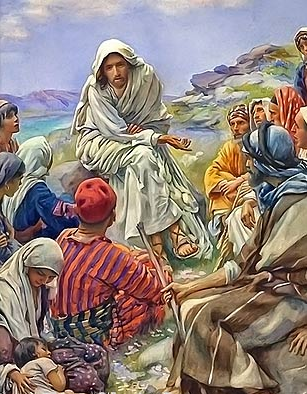
The book of Matthew (chapters 5 through 7) records Jesus’ words in a famous series of chapters known as the Sermon on the Mount.
Jesus went up on a small hill and began preaching, and what he said amazed those who heard it. It amazes us, still.
Jesus' teachings were both shocking and clear to those who heard them; startling statements that challenged those who heard him speak.
He started by teaching about the character that God wishes us to have. In these “beatitudes,” Jesus assures us that God sends blessings of comfort, hope, healing, love, and strength, and that God expects us to seek to have that same character by sharing these blessings.
He says we must become both salt and light – spiritually enriching the world by being great moral examples to it - and that we do this by humbly performing righteous works.
He gives us practical teachings on Law, challenging us not to follow the mere letters in God’s Moral Law, but the spirit these Laws seek to regulate within us. Our attitudes towards oaths, marriage and even our dealings with our enemies, he says, ought to be guided by extremely high ideals, not by shallow obedience alone.
We are to do to others what we want done to us, seek spiritual treasures rather than earthly ones, and in our religious life and in our judgment of others, we ought always be humble.
But just because this challenging sermon seems so challenging, scholars and churchmen throughout history have questioned whether it REALLY should be taken seriously at all.
For example, some have claimed that Jesus' teachings in this sermon were not meant to be followed by those who heard these words, but instead, Jesus simply meant to show us what we COULD NEVER accomplish, because they believe human beings are too evil and misguided to grasp and obey his teachings.
This seems to make Jesus into a mean-spirited and rather cynical teacher - if one could call someone like that a "teacher" at all. And indeed, most who believe this way don't see him as much of a teacher at all, but as someone who’s just teasing (or "convicting") us with high ideals.
This kind of teacher would seem mean and sadistic in a classroom, and insane standing on a hill claiming to be a religious Teacher from God. A teacher who would teach what we cannot follow (and then teach that we'd be punished by God if we didn't!) would be the worst of teachers.
Of course, Jesus never said his teachings were impossible to follow, so we can reject this view when we hear it.
Others claimed these teachings were a list of Laws for a future Kingdom of God – one we haven’t yet seen, even in the Twenty-first Century. But this, too, is wrong, because Jesus proclaimed the Kingdom was present and active during his First Century ministry. It was then and there, and is here and now, for us to make real on THIS earth, by our actions.
Still others go in the other direction, saying his teachings only applied to the Judeans of Jesus' time, and not to ours (so-called "dispensationalism.") Again, this seems very dismissive of someone who claimed to be God’s spokesman, and said that his words would live forever.
So, where does this leave us? It leaves us with a Teacher who taught us some rather clear, basic principles we were meant to take seriously. Challenging? Yes. Startling? In some cases, yes. All of these teachings require thought, prayer and study on the part of those who seek to know and follow Jesus.
But the one thing we cannot do with Jesus' teachings is to discount them, degrade them, or to explain them away as irrelevant or unimportant.
At the end of his Sermon on the Mount, Jesus said if we built our faith on the rock of his teachings, and actually put them into practice in our lives, our faith would remain solid when storms came. It would be wise to take his word on this, if we seek to call him our Teacher and Master.

Sunday, August 7, 2016
The Simple Faith #Jesus Taught! #JesusFollowers
To promote real morality and true piety, we can conceive nothing so well fitted as the simplicity of Jesus - the plain, unequivocal, uninvolved requirement of love to God, tested by love to men and active usefulness in life.
How utterly simple and plain, how free from all subtlety and dogmatic obscurity, is the teaching of Jesus.
His Sermon on the Mount is indisputable, practical, simple, having no abstruse, remote, or novel concepts. It proclaims no ideas that amaze or confuse, nor does it call for careful consideration on account of its novelty. It is a solemn, searching declaration of the universal religion of humanity.
In it, he proclaims that God is holy, wise, good; blessed are you if you are pure, meek, hungering for righteousness, and living from the heart pure, useful, holy lives. This is all the doctrine there is in it ; not a word about the nature of the Godhead, the fall of man, the need of the atonement, the deity of Christ, the necessity of baptism and the saving sacrament of the communion.
Jesus was no scholar. He spoke the language and the truth and the religion of a simple, deep-thinking representative of universal humanity - true always, everywhere, and for all. There is nothing to add, nothing to take away, nothing to excuse or to explain away in his clear teachings.
His teachings do not need any changes for the times, or the nation, or the circumstances, to account for them. It is because they give voice to what humanity knows and feels to be deepest and holiest, that they hold the allegiance of the Twenty-first, just as they will for those living of the Thirty-first Century.
We cannot conceive of anything pertaining to our religious wants or our religious faith that do not already exist in the precepts, spirit, and example of Jesus.
We can very easily make the clear, simple, moral fact precisely what we choose to have it by enough twisted reasoning. And as we consider our consciences, so we are apt to consider our religion. God has pronounced it simple, plain, unmistakable. Jesus has taught and illustrated it in ways a child can understand. But it is so plain that it becomes severe; so simple that it looks cold and hard, like a marble statue.
We often hear the simplicity of Jesus as it reveals itself in the Sermon on the Mount compared disparagingly with the complicated faith of the Nicene Creed. But what can we call “the Christian religion” except that which really adds nothing to the old Jewish and the older natural religion of love to God and love to man, except the example and spirit of Jesus!
What becomes of the Fall, and the Curse, and the Atonement, and the Sacraments, and the Trinity, and the Deity of Christ, and all the rest of the dogmatic paraphernalia of religion? They become invisible, like candles in the presence of the sun.
It is the keeping of these great commandments that discloses their richness and fullness. They are simple, few, and concise. But live by them, and you will find that all the bodies of divinity in the world could not contain their lessons, or describe the glorious richness of their contents.
Do not allow yourselves to fall under the dominion of these high-sounding subtleties, these dark dogmas, these involved metaphysical puzzles, which pass for religion and Christianity. They will unsettle your common sense, and fog up your conscience, and finally make you think religion not the plainest thing in the world - a highway, in which the wayfaring man, though a fool, need not err, —but an enigma and a riddle, a sphinx which you must helplessly bow before and adore, though she will answer no question you put to her.
It is not the unknown we can profit by, but the known. It is not the obscure, but the plain, that should have our attention. It takes no learning, no scholarship, no formal logic, no fine-spun reasoning, to know God so far as we need to know Him, as a moral governor and Father of our spirits; to know Jesus as a holy, gentle, and wise master and guide of character; to know our duty well enough to live chastely, truthfully, honestly, with mercy and sympathy.
(Adapted from a sermon by Dr. Henry W. Bellows)
Sunday, July 31, 2016
Our Life's Mission Is To Seek Godliness #JesusFollowers
Jesus does not tell us that our lives are to be wasted simply waiting for death, but he instead clearly says what all God's prophets had said: that we are to fill our lives with righteous action.
And Jesus tells and shows us that our lives are an opportunity to make the world a better place, a chance to bring the Kingdom of God into this world by our righteous acts, done with humility. (Matt. 4:17; 5:16; 6:1; 6:10)
We aren't called by Jesus to judge others' lives, and how they respond to the opportunity Jesus offers us. (Luke 6:37; Isaiah 33:22)
Nor should we arrogantly judge ourselves worthy of eternity with God based on our works, or even our vain words or confessions. It is God alone who judges us all. We are called to simply act, and praise God for the life we have been given in which to act.
The world is God's, and all that is in it (Psalm 24:1) and we were created in God's image, being, therefore, a reflection of the divine. (Gen. 9:6) So, we are called by Jesus to mirror God's holiness in all that we do. "Be holy, for I am holy," says God in Leviticus. (19:2)
God calls us to love Him with all our heart, soul, mind, and strength, and our neighbors as ourselves. This is God's challenge to show to others all the love God shows to others. (Matt. 22:37-39; Deut. 6:5)
We are called upon to be merciful and compassionate, just as God is, (Luke 6:36) and to grow into perfect maturity, just as God is perfectly mature in His ways. We must be forgiving of others, says Jesus, if we expect God's forgiveness. (Matt. 7:14-15)
Jesus himself showed that this is possible, doing all the things that God told him to do, and becoming a perfect reflection of how God wishes us to live. (John 8:29; 14:31) Jesus was the man chosen and anointed by God to show us the way of God, and to be our perfect example and pattern of what God wants us to become. (Luke 4:18; John 13:15)
Let's commit ourselves to walk along a Highway of Holiness (Isaiah 35:8) doing all we can to seek to follow the path Jesus set for us to walk in his steps.
And Jesus tells and shows us that our lives are an opportunity to make the world a better place, a chance to bring the Kingdom of God into this world by our righteous acts, done with humility. (Matt. 4:17; 5:16; 6:1; 6:10)
We aren't called by Jesus to judge others' lives, and how they respond to the opportunity Jesus offers us. (Luke 6:37; Isaiah 33:22)
The world is God's, and all that is in it (Psalm 24:1) and we were created in God's image, being, therefore, a reflection of the divine. (Gen. 9:6) So, we are called by Jesus to mirror God's holiness in all that we do. "Be holy, for I am holy," says God in Leviticus. (19:2)
God calls us to love Him with all our heart, soul, mind, and strength, and our neighbors as ourselves. This is God's challenge to show to others all the love God shows to others. (Matt. 22:37-39; Deut. 6:5)
Jesus himself showed that this is possible, doing all the things that God told him to do, and becoming a perfect reflection of how God wishes us to live. (John 8:29; 14:31) Jesus was the man chosen and anointed by God to show us the way of God, and to be our perfect example and pattern of what God wants us to become. (Luke 4:18; John 13:15)
Let's commit ourselves to walk along a Highway of Holiness (Isaiah 35:8) doing all we can to seek to follow the path Jesus set for us to walk in his steps.
Sunday, July 24, 2016
Living Water From The Well of Jesus! #JesusFollowers

The shocked Samaritan woman said, “How is it that you, a Jew, ask for a drink from me, a woman of Samaria?” (she said this because Jews didn't usually have dealings with Samaritans.) Jesus answered, offering her "living water," saying "Everyone who drinks of THIS water (in the well) will be thirsty again, but whoever drinks of the water that I will give him will never be thirsty again. The water that I will give him will become in him a spring of water welling up to eternal life.” The woman said to him, “Sir, give me this water, so that I will not be thirsty or have to come here to draw water." (John 4:7-15)
Jesus does all that his Father, our God, tells us to do, and he perfectly represents our God among us. Yahweh, our God, says Jeremiah, is the source of this Living Water (17:13) and Jesus tells us that the living water that lives through his words and teachings are what saves us, directing us towards - "welling up to" - eternal life with this God.
In Jesus' acts of service and generosity, we can see over and over again the spirit God wishes us to have. Jesus lived as a servant of all, and poured out his living blood throughout his life, as well as his blood at death, as a spiritual lesson for us.
The Fourth Gospel is a spiritual book, and its author writes spiritually about Spiritual Truths. Jesus tells us we may "drink in" his teachings, his example, and his life lessons. We make them our own when we actually do them.
Jesus prayed to God for strength, and for wisdom. This too, is an example we may follow, seeking from God strength, wisdom and guidance. If we ask for wisdom in all we do, he will guide us on the right path. (James 1:5; Prov. 3:6)
This is the same innocence and beauty Jesus refers to when he tells his disciples to allow children to come to him, and says we, too, should reflect such purity and innocence in order to be worthy of the Kingdom of God. (Mark 10:14)
Just as our bodies are composed of water from our birth, God has implanted goodness within us - good and holy waters - from our birth. We are called to use these living waters within us to water the world with Goodness.
And just as the woman at the well would be able to ask for the waters Jesus offered from God our Father to nourish her spirit, we may also ask God for continual waters of wisdom to wash over us continually, nourishing our spirits.
Sunday, July 17, 2016
Are We Broken? #JesusFollowers
Are we broken people? Are human beings born broken, or did we get that way later on? Are we capable of doing good things, or are we doomed to go through life broken, and alone?
Our experience tells us that we aren't complete, that our lives aren't all they should be. Our intuition tells us that we need to be seeking that completeness. That is a sign that we aren't fully broken, but are built to seek something better.
Our lives often seem to be broken images of what we should be. We don't seek after goals because we don't have perfect goals in front of us. We are often shaken and damaged by our circumstances, and our reaction to our struggles, frankly, is often to retreat inside ourselves and hide.
Some claim that we are born unable to seek the goodness. But our hearts tell us that we should seek it, that we must seek it, and that we are able to do it, because God created us able to do it. (Deut. 30:14)
God is complete. We know that we're not God, but we know that God is also within us, a part of what we ARE, urging us to seek Godliness in our lives.
God chose a spokesman, Jesus, who was human, exactly as we are. God chose this human being to be our example in all things, teaching us how to become complete, as God wishes us to be.
Jesus says for us to be perfectly mature and complete, just as God is perfectly mature and complete. (Matt. 5:48) Those are powerful words, and the fact that he spoke them to fellow human beings means that this is what we can do. Especially when Jesus says that he does everything God wishes him to do, and that WE, TOO, can do all that Jesus did.
This is remarkable and amazing news, since it tells us that those promptings of the heart and mind to seek God are real.
It tells us that those promptings are legitimate, and true, and that we are capable of turning to God and seeking God's perfection in our lives.
Perfection doesn't mean we all should seek to look alike, or that we must be able do every mundane task perfectly, without mistakes. It doesn't mean we get to brag about being 'perfect' to others, because this alone shows we haven't achieved it. And we can't achieve perfection by simply saying that we've achieved it, or by re-defining it as an object we can claim by our words alone.
It also doesn't mean that we are going to be perfect TODAY, or that we won't continue to miss the mark - that high goal that Jesus set for us.
But it does mean that we have hope. If Jesus did it, and he was human like us, that truly means that we can do it, too! It means that we aren't doomed to be mediocre, or halfway human. It means that to be human means to seek after Godliness.
At its core, the Good News that Jesus taught was that we can turn to God and find a better, more whole and complete way of living by seeking not our own gratification, but seeking the welfare and wholeness of those around us.
Service to others completes us. Loving those who need love brings us the purpose and completeness we've been seeking on our own.
And just as God chose Jesus at his baptism to be God's spokesman on earth, God seeks us to be baptized and spread this Good News to others throughout the earth.
To seek this way means to build up God's Kingdom right here on earth. It means we recognize our true nature and that we find our purpose in this life: to love God with all our hearts, minds, soul and strength and understanding, and love and serve our neighbors as ourselves. Eternal life with God begins now, in obedience to Jesus' teachings.
Those who are seeking to become more perfect and mature are called upon to help others join them. That is the Church. The Church that Jesus established is most basically an organization to build more mature and perfected people, so that we may serve others and bring wholeness to others - and that is the only message Jesus taught us.
Any message that adds to this basic one doesn't build the Kingdom, but instead builds individual 'kingdoms' of men, and the only person we must hear is the one who was chosen by God to teach us how to live: Jesus.
So, let us embrace this message and let others know this Good News about our brokenness: we were not born broken, and we can seek to be perfectly whole in Jesus' example!
Our experience tells us that we aren't complete, that our lives aren't all they should be. Our intuition tells us that we need to be seeking that completeness. That is a sign that we aren't fully broken, but are built to seek something better.
Our lives often seem to be broken images of what we should be. We don't seek after goals because we don't have perfect goals in front of us. We are often shaken and damaged by our circumstances, and our reaction to our struggles, frankly, is often to retreat inside ourselves and hide.
Some claim that we are born unable to seek the goodness. But our hearts tell us that we should seek it, that we must seek it, and that we are able to do it, because God created us able to do it. (Deut. 30:14)
God is complete. We know that we're not God, but we know that God is also within us, a part of what we ARE, urging us to seek Godliness in our lives.
God chose a spokesman, Jesus, who was human, exactly as we are. God chose this human being to be our example in all things, teaching us how to become complete, as God wishes us to be.
Jesus says for us to be perfectly mature and complete, just as God is perfectly mature and complete. (Matt. 5:48) Those are powerful words, and the fact that he spoke them to fellow human beings means that this is what we can do. Especially when Jesus says that he does everything God wishes him to do, and that WE, TOO, can do all that Jesus did.
This is remarkable and amazing news, since it tells us that those promptings of the heart and mind to seek God are real.
It tells us that those promptings are legitimate, and true, and that we are capable of turning to God and seeking God's perfection in our lives.
Perfection doesn't mean we all should seek to look alike, or that we must be able do every mundane task perfectly, without mistakes. It doesn't mean we get to brag about being 'perfect' to others, because this alone shows we haven't achieved it. And we can't achieve perfection by simply saying that we've achieved it, or by re-defining it as an object we can claim by our words alone.
It also doesn't mean that we are going to be perfect TODAY, or that we won't continue to miss the mark - that high goal that Jesus set for us.
But it does mean that we have hope. If Jesus did it, and he was human like us, that truly means that we can do it, too! It means that we aren't doomed to be mediocre, or halfway human. It means that to be human means to seek after Godliness.
At its core, the Good News that Jesus taught was that we can turn to God and find a better, more whole and complete way of living by seeking not our own gratification, but seeking the welfare and wholeness of those around us.
Service to others completes us. Loving those who need love brings us the purpose and completeness we've been seeking on our own.
And just as God chose Jesus at his baptism to be God's spokesman on earth, God seeks us to be baptized and spread this Good News to others throughout the earth.
To seek this way means to build up God's Kingdom right here on earth. It means we recognize our true nature and that we find our purpose in this life: to love God with all our hearts, minds, soul and strength and understanding, and love and serve our neighbors as ourselves. Eternal life with God begins now, in obedience to Jesus' teachings.
Those who are seeking to become more perfect and mature are called upon to help others join them. That is the Church. The Church that Jesus established is most basically an organization to build more mature and perfected people, so that we may serve others and bring wholeness to others - and that is the only message Jesus taught us.
Any message that adds to this basic one doesn't build the Kingdom, but instead builds individual 'kingdoms' of men, and the only person we must hear is the one who was chosen by God to teach us how to live: Jesus.
So, let us embrace this message and let others know this Good News about our brokenness: we were not born broken, and we can seek to be perfectly whole in Jesus' example!
Sunday, July 10, 2016
THE PARABLES: Is Our Faith Built On A Rock, Or Sand? #JesusFollowers

Could a familiar parable of Jesus actually be teaching the opposite of what most pastors teach us about our Good Works and Eternal Life?
Jesus taught his disciples, and all others who came to hear him, using simple stories – parables – that, despite being simple and relatable, also tended to shock those who heard them.
To read the parable of the house built on the rock with new eyes and fresh ears may be shocking to many Christians who are used to hearing a rather watered-down interpretation. Viewing this parable in its clear form is uncomfortable to hear, and perhaps that’s why it and its messages is avoided or touched on so lightly by today’s pastors.
Jesus says: “Everyone then who hears these words of mine and does them will be like a wise man who built his house on the rock. And the rain fell, and the floods came, and the winds blew and beat on that house, but it did not fall, because it had been founded on the rock. And everyone who hears these words of mine and does not do them will be like a foolish man who built his house on the sand. And the rain fell, and the floods came, and the winds blew and beat against that house, and it fell, and great was the fall of it.” (Matthew 7:24-27/ESV)
Faith on the Rock means that good works – DOING what Jesus tells us to do in his teachings – actually matters, and are required for entry into the Kingdom. This flies in the face of much teaching from today’s Pastors, but Jesus’ words are clear, and can mean nothing else.
The parable cannot simply mean “right belief” or the mere assent to man-made doctrines. Jesus elsewhere condemns "vain words/empty phrases" (Matt. 5:7) and in a verse just previous to this story, we are told by Jesus that not all those who simply shout, "Lord, Lord" but do not follow his commands will enter into the Kingdom. But only “the one who does the will of my Father who is in heaven." (Matt. 7:21)
And just so that he was clear – and that by “the Kingdom” we would understand that he was referring also to Eternal Life – Jesus elsewhere answered the question, “what must I do to obtain eternal life,” with clarity: Obey God’s commandments. (Mark 10:17-19; Matt. 19:16-17; Luke 18:19-21)
Mere belief in a set of theological statements or accepting stories ABOUT Jesus is not all God asks of us.
And in truth, Jesus taught that our Eternal Life begins HERE, with the earthly establishment of God’s Kingdom. (Matt. 6:10) Our final destination with God, however, is judged by God alone, and it is according to our Works alone, though we do not judge or own fitness for Heaven. (Psalm 62:12; James 4:12; Matt. 7:1; 16:27)
We, today, cannot avoid or explain away this or any other message our Master tells us, even if it makes us uncomfortable or challenges us to do Good Works and serve others, just as Jesus did.
If we claim we love Jesus, but choose NOT to hear AND DO what he says, we've built our lives on shifting sands, not the Rock of his words. (1 John 2:4) We honor Jesus with our hearts and minds and actions, therefore, when we seek to do what he modeled for us to do with his life and teachings.
Sunday, July 3, 2016
THE PARABLES – The Good Samaritan: Go, and Do The Same! #JesusFollowers

Jesus taught his disciples, and all others who came to hear him, using simple stories – parables – that, despite being simple and relatable, also tended to shock those who heard them.
Jesus uses the story of the Good Samaritan to teach his fellow countrymen, the “Chosen people,” about the salvation God offers to all, and what is required of those who seek it.
This familiar story therefore teaches important Truths, both for those who first heard it, and even for us, today.
Jesus is asked by a lawyer/scribe what he must do to inherit eternal life. Jesus immediately directs his attention to the moral Law of the Hebrew Bible, and the questioner recites, “You shall love the Lord your God with all your heart and with all your soul and with all your strength and with all your mind, and your neighbor as yourself.” Jesus replied, “You have answered correctly; do this, and you will live.”
When the lawyer went on to ask, “And who is my neighbor?” Jesus replied with the story of the Good Samaritan:
“A man was going down from Jerusalem to Jericho, and he fell among robbers, who stripped him and beat him and departed, leaving him half dead. Now by chance a priest was going down that road, and when he saw him he passed by on the other side. So likewise a Levite, when he came to the place and saw him, passed by on the other side. But a Samaritan, as he journeyed, came to where he was, and when he saw him, he had compassion. He went to him and bound up his wounds, pouring on oil and wine. Then he set him on his own animal and brought him to an inn and took care of him. And the next day he took out two coins and gave them to the innkeeper, saying, ‘Take care of him, and whatever more you spend, I will repay you when I come back.’ Which of these three, do you think, proved to be a neighbor to the man who fell among the robbers?” He said, “The one who showed him mercy.” And Jesus said to him, “You go, and do the same.”
The story was shocking because the “hero” of the story was an outcast, someone in the land of Samaria who wasn't part of the “in” class of Judea. And yet, this despised Samaritan knew enough of God’s Law – His Will for our lives – to treat the traveler in distress in a holy and humane manner.
Today, many who feel themselves part of the “in” class feel no requirement to help those they walk by, along the highway of life. By reciting a prayer, or a creed, they believe themselves to be “chosen” or the “Elect of God,” considering themselves “saved” and “heaven-bound.” They believe themselves to be released from Jesus’ call for us to do Good Works, which they see as unnecessary for their eternal salvation.
But Jesus disagrees with this approach to eternity and Works, as his answer to the lawyer shows.
Jesus calls on us to follow God’s Moral Law with our actions, not just vain words of “Lord, Lord,” walking by those in need with cold indifference.
Jesus instead would have us actively do Good Works as an example and light to the world.
We are called upon by Jesus to, “Go, and do the same.” To “Go” and “Do” are the two most powerful lessons Jesus ever taught. In fact, he repeatedly calls on those who follow him to action: to love and serve others, to deny ourselves, to seek to do righteousness, and to build on solid rock of Righteous action.
And because we have the example of a human being, Jesus, we know we are capable of doing all that God asks us.
Picking up a cross, going the extra mile, expanding our 'talents' to serve others, and being the Good Samaritan cannot mean a life of leisure and ease. It is a call to action.
The Samaritan is the hero of the story – rather than the priest or the Levite – because he took action to help the man in need. He viewed the man, this stranger, as his neighbor, and as a child of God, who was worthy of being helped. Jesus tells us God wishes us to love others in the same way. “Go, and do the same.”
The Gospel of Jesus is not simply to have a belief in him, it is to serve God, to follow Jesus, and to love others just as we love ourselves. His teachings call us to serve and to act, not to sit in vain contemplation of the acts of Jesus, nor to simply admire Jesus, nor even to worship him from afar.
The message of the Good Samaritan is that we are to be the hands and words and comforting arms of God's Kingdom here on Earth. We are called by Jesus to be a People of God, like the Good Samaritan who comforts others alongside the road of life who are distressed, and do so in the name of God's Anointed servant, Jesus.
Picture: The Good Samaritan by Julius Schnorr von Carolsfeld, 1851-60
Subscribe to:
Posts (Atom)